
You land, you get to the station, and there is a machine offering you a single ticket, a 24-hour pass, a 72-hour pass and a city card that also includes eleven museums. The queue behind you is growing. You pick the middle one because it sounds sensible.
That guess is wrong about as often as it is right, and the difference over a week adds up to a decent dinner. The good news is that the decision takes about ninety seconds if you know what to compare.
The only piece of math that matters
Divide the price of the day pass by the price of a single ride. That is how many journeys you need to take before the pass wins.
In most European cities the answer lands between three and four. Berlin, Vienna, Prague, Madrid and Warsaw all sit roughly in that band. So the question becomes simple: are you realistically taking four separate rides today?
Most travelers overestimate this. A typical sightseeing day is a ride out in the morning, a walk between two or three places that turn out to be close together, and a ride back at night. That is two journeys. The pass loses.
The days it wins look different. You are crossing the city to a district in the other direction, you are coming back to the apartment mid-afternoon because someone needs a nap, and you are going out again in the evening. That is five or six rides and the pass wins easily.
So the honest version of the question is not “is the pass good value” but “what kind of day is this.”

Cities where you should just walk
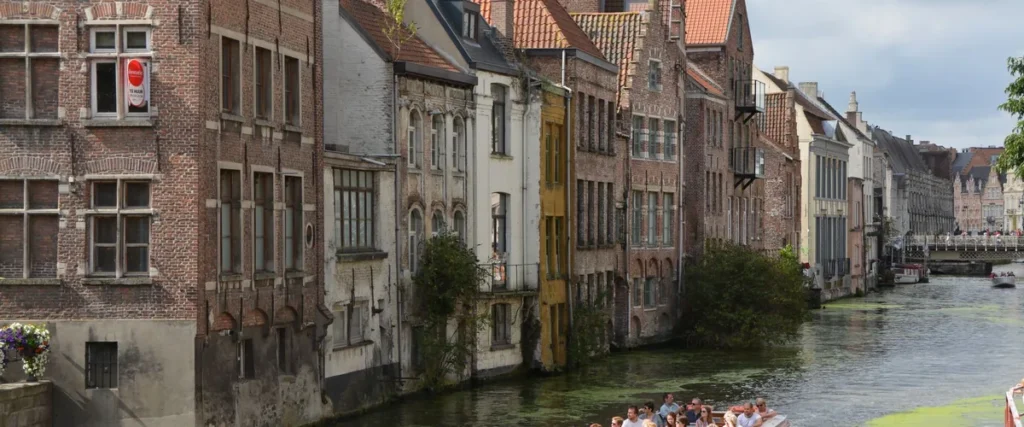
Some historic centers are small enough that buying any transit at all is a mistake. The old town of Dubrovnik, the center of Bruges, Ljubljana, Salzburg’s old town, most of central Bern, and the walkable core of Copenhagen all fall into this group. In each case the sights sit inside a radius you can cross on foot in twenty to thirty minutes.
Florence is the sharpest example. Nearly everything a first-time visitor wants is within a fifteen-minute walk of the cathedral, and the bus network mostly serves places you are not going. People buy passes there out of habit and never use them.
Copenhagen is a variation on the theme, because the thing to rent is a bike rather than a transit pass. The standard three-day route through the city works almost entirely on two wheels and on foot.
The test is easy to run before you go. Drop your five or six intended stops onto a map. If they sit inside a circle you could walk across in half an hour, you do not need a pass. You need comfortable shoes and one taxi budgeted for the night it rains.
Where the airport transfer alone justifies it
This is the exception that flips the math on arrival day. In several cities the airport train or bus is expensive enough on its own that a multi-day pass covering the airport zone costs barely more than two airport singles.
Copenhagen, Oslo, Stockholm, Vienna and Amsterdam all have versions of this. Check one number before you buy: whether the pass you are looking at actually includes the airport zone. It frequently does not, and the zone map is where the money quietly leaks out. Vienna’s airport line is the classic trap, sitting outside the core zone that the tourist passes cover.
If the airport run is included and you are staying three days or more, buy the longer pass at the airport machine and stop thinking about it.
What to check, city by city
| Question | Why it changes the answer |
|---|---|
| Day pass price divided by single fare | Gives you the break-even ride count, usually three or four |
| Does it include the airport zone? | Two airport singles can cost more than the whole pass |
| Is there a daily fare cap on contactless? | If yes, tapping your card gives you the pass automatically |
| Does 24 hours mean the clock or the calendar day? | A calendar-day pass bought at 4pm wastes most of itself |
| Which zones do your stops sit in? | One suburban palace or beach can push you into a pricier zone |
| Is there a group or family version? | Often cheaper than two adult passes from two travelers up |
Contactless capping quietly solved this in some cities
In a growing number of networks you no longer need to decide anything. You tap a bank card or phone at every gate, the system counts your journeys, and once you hit the daily cap it stops charging you. You get the day pass without having bought it, and if you only took two rides you pay for two rides.
London runs the best-known version. Several other networks have added capping, and where it exists the machine-buying decision disappears. The catch is that capping usually only works if you use the same card every time, so one traveler tapping their phone and their partner’s card on alternate days breaks it.
Check the operator’s own site before you land, since this changes frequently. Berlin’s BVG, Barcelona’s TMB and Vienna’s official transport guide all publish current fares and pass conditions in English, and five minutes on those pages beats guessing at a machine.
Tourist cards are a different product
The card that bundles transit with museum entry is not a transit decision. It is a sightseeing decision wearing a transit costume.
These cards pay off under one condition: you were already going to visit most of the expensive attractions on the list, at close to their full adult price, within the card’s window. If that is genuinely your plan, they are good value and they save queuing.
They stop paying off the moment your trip includes a slow morning, a long lunch, or a museum you would not otherwise have entered. Buying a 72-hour card and then visiting two paid sights is a straightforward loss, and the pressure to “use the card” is how people end up sprinting through a gallery they did not want to see.
Before buying, add up the actual entry prices of the places you have already decided to visit. If that number is below the card price, skip it. And remember that plenty of European cities have enough genuinely free things to do that a card full of paid attractions may not match how you travel anyway.
The zone trap
Most networks price by zone, and tourist passes are usually sold for the central zones only. That is fine until your itinerary includes exactly one thing outside them.
Versailles is outside central Paris. Schönbrunn is fine but Vienna airport is not. Barcelona’s central pass does not stretch to the airport. Stockholm’s archipelago boats sit outside the standard ticket entirely. Each of these is a single journey that can cost more than the day it belongs to.
Handle it by extending the pass for that day only, or buying one supplement ticket for that trip and keeping the cheaper central pass for everything else. What you should not do is upgrade the whole week to cover one afternoon.
Two travelers change the math
Group tickets are underused. Several networks sell a small-group day ticket that covers up to five people for roughly the price of two adult passes. Berlin, Vienna and Munich all have a version. If you are two or more, always price the group ticket before buying individual passes.
Children are usually free below a certain age and half price above it, but the cutoff moves between countries. Families often do better on a family day ticket than on any combination of adult passes plus child fares.
A routine that takes ninety seconds
- Look at today’s stops and count the rides you will genuinely take. Two or fewer means singles.
- Check whether the network caps contactless fares. If it does, tap and stop thinking.
- Check the airport zone on arrival and departure days specifically. Those are the two days most likely to justify a longer pass.
- If you are two or more people, price the group ticket.
- Only consider the tourist card after adding up the entry prices you were already committed to.
Run this once per city rather than once per trip. The right answer in Berlin is often wrong in Florence.
Plan the day so the question mostly disappears
The deeper fix is grouping. Most transit spending comes from itineraries that zigzag, and a day arranged by neighborhood rather than by opening hours cuts the ride count in half without cutting anything you wanted to see.
Map the day’s stops before you commit to a pass. If they cluster, you walk. If they scatter, buy the pass and stop worrying about individual fares. Lentii makes this quick, since you can drop the day’s stops onto a shared plan and see immediately whether they sit within walking distance of each other, then hand the whole thing to whoever you are traveling with. The same grouping logic drives the ready-made week-long routes and it saves more than transit money.
For a sense of how city transport fits into the broader daily spend, the breakdown of what a week in the Nordics actually costs puts local transport alongside food and accommodation, which is the honest way to see whether a pass is worth the attention at all.
FAQ
Is a metro pass worth it for a weekend?
Usually only if you are staying outside the center or your arrival uses an expensive airport link. For two days of central sightseeing, most people take fewer rides than the break-even point, and singles or contactless tapping come out cheaper. Count the rides you will actually take rather than the rides you might.
Are city tourist cards a good deal?
Only when you were already planning to pay full price for most of the attractions they include, inside the card’s time window. Add up those entry fees first. If the total is below the card price, the card is a loss no matter how many extras are listed on the back.
Can I just use my bank card on European public transport?
In many cities yes, and increasingly with a daily cap that turns repeated taps into the equivalent of a day pass. It is not universal, and some networks still require a local ticket or app. Check the operator’s English-language site before you travel, and use the same card for every tap so the cap applies correctly.