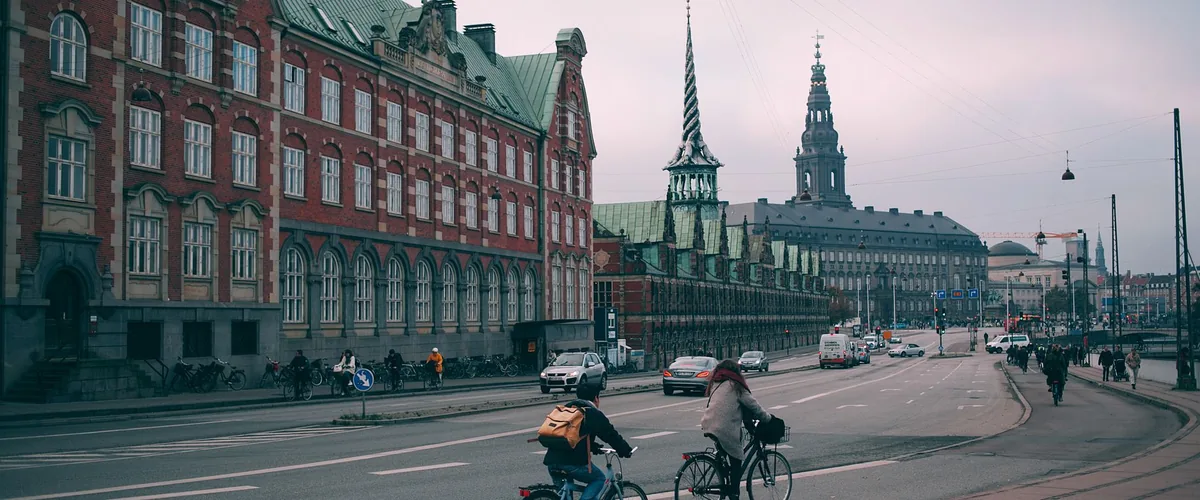

Three days is the sweet spot for a first trip to Copenhagen. It’s long enough to see the harbor, the palaces, and at least one neighborhood that feels like real local life, but short enough that you won’t run out of things to fill it. The city is small, flat, and made for walking or cycling, which means you can pack a lot into a weekend without spending half of it in transit.
This is a day-by-day route built for someone arriving for the first time. It moves in a rough loop so you’re rarely backtracking, and it leaves room to slow down when you find a café or a canal you don’t want to leave. Use it as a skeleton, then hang your own detours on it.
Before You Go: A Few Practical Notes
Copenhagen is compact. Most of what you’ll want to see sits inside a walkable core, and the metro and harbor buses cover the rest. If you’d rather not think about single tickets, the Copenhagen Card bundles public transport with entry to dozens of attractions, and it pays off fast if you’re museum-hopping. Otherwise, download the city’s journey planner and pay as you go. The city runs on bikes. Renting one for a day changes how Copenhagen feels, and the flat terrain means you don’t need to be an athlete to enjoy it. If cycling in traffic isn’t your thing, the good news is that the whole itinerary below works on foot with the occasional metro hop. One thing worth sorting before you arrive: where you sleep. Neighborhood matters more here than star rating. Staying near Nørreport, Vesterbro, or Christianshavn puts you within walking distance of most of this route. If you’re weighing options, our guide on finding good accommodation covers the criteria that actually matter once you’re on the ground.
Day 1: The Classic Harbor and City Center
Start where every Copenhagen postcard starts: Nyhavn. The row of painted townhouses along the old canal is touristy, and it’s still worth it, especially early when the light is soft and the crowds are thin. Grab a coffee, walk the length of the quay, and watch the canal boats load up. From Nyhavn, one of those boats is actually a smart move. A canal tour gives you the city from the water in under an hour, and it quietly orients you for the rest of the trip: you’ll pass the Opera House, the Black Diamond library, and the Little Mermaid without wearing out your feet. It’s the rare tourist activity that earns its place on day one. Back on land, walk toward Amalienborg, the winter home of the Danish royal family. If you time it for noon, you’ll catch the changing of the guard. From there it’s a short stroll to the Marble Church, whose dome you can sometimes climb for a view over the rooftops. Spend the afternoon on Strøget, one of Europe’s longest pedestrian streets, which threads through the center from Kongens Nytorv to City Hall Square. Don’t rush it in a straight line. The best parts are the side streets and the smaller squares like Gråbrødretorv, where you can sit with a beer and watch the city go by. Copenhagen is one of the most walkable cities in Europe, and this is the stretch that proves it, if you’re curious why walking beats transport for really seeing a place, we made the case in our piece on walkable cities. End the day at Tivoli Gardens, especially if you can stay until dark. The 19th-century pleasure garden is part amusement park, part fairy-tale landscape, and it lights up beautifully in the evening. You don’t need to ride anything to enjoy it, the gardens and the atmosphere are the point. Check current opening dates before you go, since Tivoli closes for parts of the year. Day 2: Palaces, Gardens, and Christianshavn
Give the morning to Rosenborg Castle, a Renaissance palace set in the King’s Garden. Inside you’ll find the Danish crown jewels; outside, you get one of the loveliest green spaces in the city, perfect for a slow coffee if the weather cooperates. If castles aren’t your thing, the garden alone justifies the trip. From there, make your way toward Christiansborg Palace on the little island of Slotsholmen. This is the seat of the Danish Parliament, and the tower is free to climb, giving you the highest public viewpoint in the city center. It’s an easy win that a lot of first-timers miss. In the afternoon, cross the harbor to Christianshavn. This is where Copenhagen gets a little more relaxed. Wander the canals, which feel more residential and less staged than Nyhavn, and climb the corkscrew spire of the Church of Our Saviour if you have the legs for it, the external staircase wraps around the outside of the tower and the view is genuinely great. Next door is Freetown Christiania, the self-governing community that has occupied a former military site since the 1970s. It’s an unusual, sometimes controversial place, and it’s a real part of the city’s story. Respect the posted rules, especially the ones about photography, and take it on its own terms. For dinner, Christianshavn and nearby Islands Brygge have solid options, from harborside spots to Reffen, the sprawling street-food market on the industrial waterfront when it’s in season. If you like to plan your meals around local specialties rather than wandering hungry, our travel food guide is a good primer on eating well without overthinking it.Day 3: Local Neighborhoods and Design
Your last day is for the Copenhagen that locals actually live in. Start in Vesterbro, the former meatpacking district that turned into one of the city’s best areas for coffee, brunch, and design shops. The Kødbyen (Meatpacking District) still has working butchers alongside galleries and restaurants, and the contrast is part of the charm. If you’d rather go greener, cross to Nørrebro and walk the Assistens Cemetery, which doubles as a park where Hans Christian Andersen is buried, then follow Jægersborggade, a single short street packed with independent shops, bakeries, and small restaurants. This is the kind of place that doesn’t show up on the postcards but tends to be what people remember. Spend part of the afternoon on design and hygge, the Danish idea of cozy contentment that shapes how the city looks and feels. Whether that’s the Designmuseum Danmark, a few furniture showrooms, or simply an unhurried hour in a café with a cinnamon bun, this is the note to end on. Copenhagen rewards slowing down. If you have a flight to catch, the metro runs straight from the center to the airport in about 15 minutes, so you can hold onto your last neighborhood a little longer than you’d expect. How Much Will Three Days Cost?
Copenhagen isn’t cheap, but it’s manageable if you’re deliberate. Here’s a rough sense of daily spending per person, in Danish kroner, so you can build a realistic budget rather than get surprised at checkout.| Style | Approx. per day (DKK) | What it looks like |
|---|---|---|
| Budget | ~500–800 | Hostel or shared room, bakery breakfasts, street food, walking and biking |
| Mid-range | ~1,000–1,800 | Solid hotel, a sit-down dinner, a couple of paid attractions, some transport |
| Comfortable | 2,000+ | Central hotel, nicer restaurants, tours, taxis when it rains |