
The free things in a European city are rarely the leftovers. In most capitals the single best view, the best park and at least one world-class museum cost nothing, while the paid attraction with the queue outside is the one people regret. Building a day around the free options is not a compromise budget move. Done properly it is often the better day.
Here are 20 that hold up, grouped by city, plus the two rules that unlock most of the rest.
Rule one: national museums are often free, municipal ones have free days
Britain made national museum entry free in 2001 and it stuck, so the British Museum, the National Gallery, the Tate galleries and the Natural History Museum all cost nothing to walk into. Paris runs a different system: the permanent collections of the city-run museums under Paris Musées are free year-round, while the state-run big names charge. Rome’s Vatican Museums open free on the last Sunday of most months, with a queue to match.
The pattern repeats across the continent with local variations, so it is worth a two-minute check per city before you pay for anything. Free days move around and get suspended in peak season, so confirm on the museum’s own site rather than a listicle from three years ago.

Rule two: the best viewpoint is usually not the paid one
Nearly every city with a paid observation deck has a free rival that locals use. A hill, a cathedral hill, a department store roof terrace, a bridge. The paid version gets the marketing budget. The free version gets the sunset crowd of people who live there.
One caveat to both rules: they need dry weather. The free half of a city is mostly outdoors, and a wet morning removes it, so it helps to know what actually fills a rainy day in a European city before the forecast turns.
London
1. The British Museum. Free, enormous, and best treated as two hours on one wing rather than an attempt at the whole thing. Go at opening or after 3pm.
2. Sky Garden. A glass-roofed garden on top of a City tower with a full view down the Thames. Free, but you need to book a timed slot in advance, and they release them a few weeks out.
3. Hampstead Heath and Parliament Hill. A proper walk rather than a park stroll, ending at a view of the whole skyline. It is the best free hour in London on a clear day.
4. Borough Market at midday. Free to wander, and the samples are generous enough to function as a light lunch if you are not shy. More on eating well without overspending in our travel food guide.
Paris
5. Père Lachaise cemetery. Free, quiet, and more interesting than that sounds. Pick up the map at the entrance or you will wander for an hour without finding anything you came for.
6. The Petit Palais. A city museum, so the permanent collection is free, and the courtyard garden café is one of the more pleasant places to sit in the 8th.
7. Canal Saint-Martin in the evening. Locals sit on the banks with bottles and takeaway. Costs whatever you bring.
8. Notre-Dame and the Île de la Cité. Entry to the cathedral is free, and the surrounding island is a walk rather than an attraction, which is the point.
Berlin
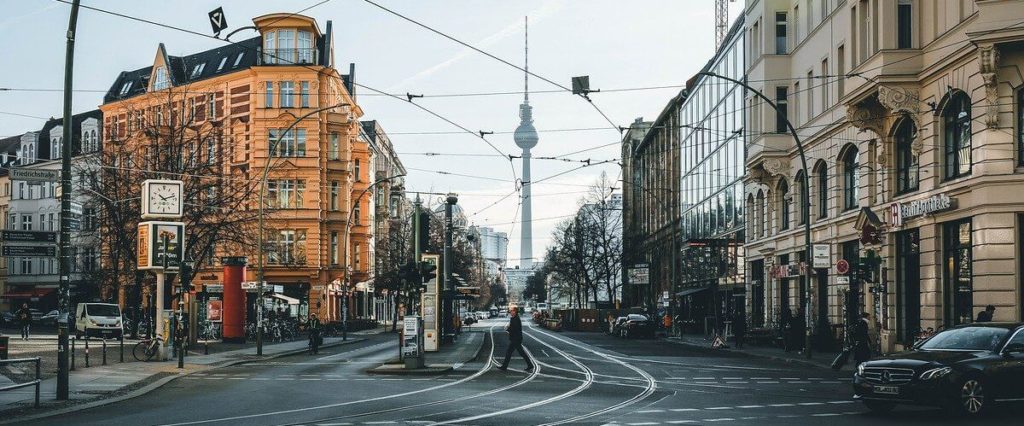
9. The East Side Gallery. A 1.3 km stretch of the Wall covered in murals, open air, free, and busiest in the middle of the day.
10. Tempelhofer Feld. A decommissioned airport turned public space where people cycle and skate down the runways. There is nothing else quite like it in a European capital.
11. The Memorial to the Murdered Jews of Europe. Free, central, and worth the time to walk into the middle of rather than photograph from the edge.
12. Sunday at Mauerpark. Flea market, and a public karaoke session in the amphitheater that draws a few hundred people. Free to watch. Our Berlin guide has more on how the districts differ.
Rome
13. The Pantheon. Entry now carries a small charge on most days, but it remains free on some Sundays. Check before you go, and either way the piazza outside costs nothing.
14. Trastevere in the early evening. A neighborhood to walk rather than a sight to see. Cross the river around 6pm and follow the noise.
15. The Aventine keyhole and Giardino degli Aranci. A famous framed view of St Peter’s through a garden gate, and an orange grove above the city. Both free, both a short climb from the Circus Maximus.
Copenhagen, Stockholm and Amsterdam
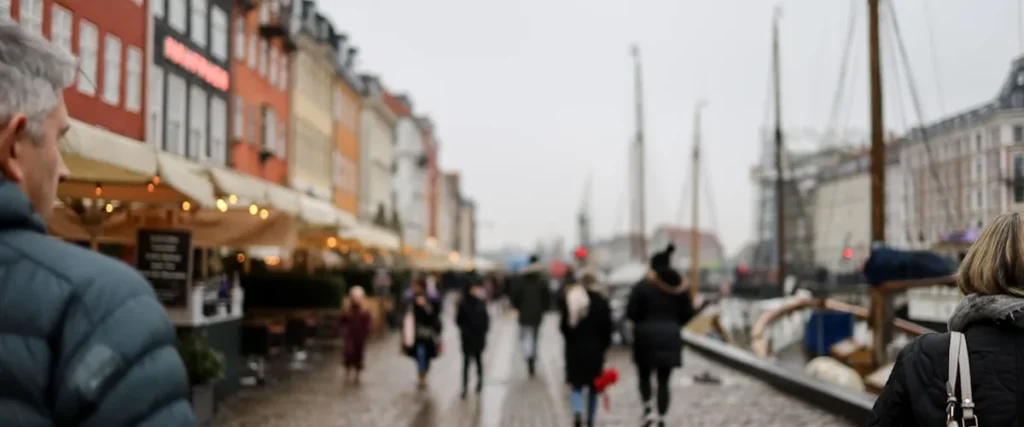
16. Copenhagen harbor baths. Free public swimming in clean harbor water at Islands Brygge and Kalvebod Bølge, roughly June to August. Bring a towel and nothing else.
17. Assistens Cemetery, Copenhagen. Locals use it as a park. It does not feel morbid, it feels like a shortcut with better trees.
18. Skinnarviksberget, Stockholm. A rock outcrop in Södermalm with the best free view of the city. Steep for five minutes, then flat. If you are weighing the two Nordic capitals, the Stockholm and Copenhagen comparison covers what each does better.
19. Stockholm’s Gamla Stan at 8am. The old town is genuinely lovely and genuinely overrun. An hour before the tour groups it is a different place.
20. The Amsterdam canal ring on foot. The boat tour costs €18 to €25. The same route walked, starting at the Jordaan and ending at the Amstel, costs nothing and lets you stop.
Three more cities where the free version wins
Lisbon. The city sells tram rides and viewpoint access, and the tram is genuinely fun, but the miradouros are the real attraction and every one of them is free. Miradouro da Senhora do Monte is the highest and the least crowded at sunrise. Walking up costs a sweaty twenty minutes, which is why most people pay for the tram instead.
Vienna. An expensive city with an unusually generous free layer. The grounds at Schönbrunn are free even though the palace is not, the Prater park costs nothing until you get on a ride, and the Naschmarkt is free to walk. The Wien Museum’s permanent collection is free, which is a rare thing for a city museum of that size.
Prague. The castle grounds are free to walk through even when the interiors are ticketed, and the walk up through Malá Strana at 7am, before the day trippers arrive off the trains, is the version of Prague people think they are buying with a tour.
The through-line in all three is timing rather than money. The free option and the paid option often show you the same thing. What separates a good free day from a disappointing one is being there at an hour when it is not shoulder to shoulder.
What free days actually cost
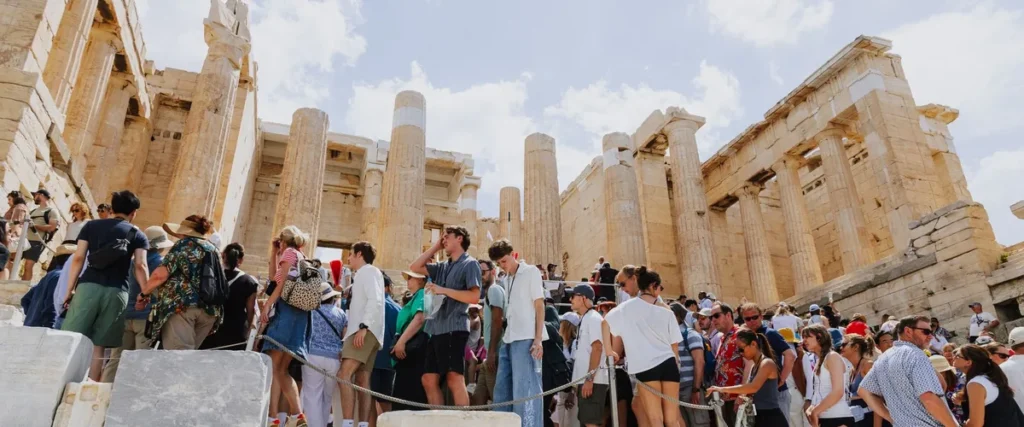
Free entry is not free time. On a Vatican free Sunday you will spend 90 minutes in a queue that costs nothing to skip on a paid weekday, and if your trip is five days long, that queue is expensive in the currency that matters.
| Free option | What it saves | What it costs you |
|---|---|---|
| Museum free day | €15–25 | 60–120 min queuing, crowded rooms |
| Free walking tour | €20–30 vs a paid tour | A tip of €10–15 is expected |
| Hill viewpoint instead of observation deck | €20–35 | A 15–30 min walk uphill |
| Walking the canal ring / old town | €18–25 vs a boat or bus tour | Tired feet, no commentary |
The free walking tour deserves its own warning. Guides work for tips, and €10 to €15 per person is the going rate for a good one. Budget for it, or take a self-guided route instead and skip the awkwardness at the end.
Paid days are not all equal either. The hour you walk in changes the visit as much as the ticket does, and our guide to the quietest times to visit Europe’s big attractions has the patterns for the Louvre, the Vatican and the Alhambra.
How to build a day around this
The pattern that works is one anchor and two fillers. Pick one free thing that has a fixed time attached, a museum free morning or a Sunday market, and build the rest of the day walking outward from it. Cities reward this. Most European capitals are dense enough that the gap between two sights is itself worth seeing, which is the argument in our piece on walkable cities.
Two practical constraints. Free museum days cluster on Sundays, so a Sunday in a city is worth more than a Tuesday. And free outdoor options collapse in bad weather, so keep one indoor free option per city in reserve rather than discovering the problem at 11am in the rain.
If you are stitching several cities together, the sequence matters more than the list. Landing in Rome on a Monday when the free Sunday has passed wastes the best option in the city. Sketch the route first, then drop the free anchors onto the right days. Our ready-made 7-day Europe routes are a reasonable starting shape. You can build the whole thing day by day in Lentii, move a city when the free day falls wrong, and share the plan with whoever you are traveling with before anyone books.
A day built this way is also a day where the transit pass loses. In most cities the pass only beats singles from about the fourth ride, and walking between free sights rarely gets you there, which is the whole point of running the transport pass math before you buy one.
FAQ
Which European city has the most free things to do?
London, by a distance, because national museum entry is free rather than discounted. Berlin is second on a budget basis, since its best open-air sites cost nothing and its state museums run a free Sunday program.
Are free walking tours actually free?
No. They run on tips and guides depend on them, so plan on €10 to €15 per person. They are still cheaper than a paid tour, and the good ones are better, but they are not a zero-cost activity.
Do I need to book free attractions in advance?
Sometimes. Free timed-entry systems are now common for the popular ones, London’s Sky Garden being the obvious example, and slots go weeks ahead. Parks, viewpoints and neighborhoods never need booking.