
Ask anyone who has been to Oslo what it cost and you will get a number with a wince attached. The Nordics have a reputation for emptying wallets, and it is half true. The reputation comes almost entirely from three line items, and once you know which ones they are, a week in Denmark, Sweden and Norway lands closer to a week in Amsterdam than most people expect.
Here is what a week actually costs, broken down per country and per day, with the levers that move the number most.
The short answer
For one person, sharing a room, staying in cities and eating a mix of supermarket food and cheap restaurants, plan on roughly €90 to €130 a day in Denmark and Sweden and €125 to €190 in Norway. That covers a bed, food, local transport and one paid thing most days. It does not cover flights in, and it does not cover a bar habit.
These are ballpark ranges for 2026, not quotes. The three countries did not move together this year, and Norway moved for two separate reasons at once.
The first is ordinary price rises. Norwegian restaurant and accommodation prices went up 5.7% in the twelve months to July 2026, according to Statistics Norway. Danish consumer prices rose 1.7% over the same period and Swedish ones barely moved at 0.3%.
The second is the krone, and it is the larger of the two. A euro bought 11.67 Norwegian kroner in September 2025 and 10.77 a year later, going by the European Central Bank’s reference rates. Nothing changed on the menu. Everything on it got about 8% more expensive for anyone paying in euros. Put the two together and a Norwegian week costs roughly 14% more in euro terms than it did last year, which is why the Norway column below has moved a long way while the other two have barely shifted. The Danish krone is pegged to the euro and did not move. The Swedish krona weakened slightly, so Sweden is fractionally cheaper than it was.
The rates to carry in your head, from 7 September 2026: a euro buys 7.47 Danish kroner, 11.16 Swedish kronor and 10.77 Norwegian kroner. This is the step where people lose track of what a day actually cost.
| Per person, per day | Denmark | Sweden | Norway |
|---|---|---|---|
| Bed (hostel dorm / shared budget room) | €35–60 | €30–55 | €52–80 |
| Food (supermarket breakfast, cheap lunch, one sit-down meal) | €30–45 | €28–42 | €44–63 |
| City transport | €8–12 | €8–12 | €11–16 |
| One paid thing (museum, boat, viewpoint) | €12–20 | €12–18 | €17–29 |
| Rough daily total | €90–135 | €80–125 | €125–190 |

Denmark: cheaper than its reputation, if you skip the restaurants
Copenhagen is the Nordic capital people assume will hurt most, probably because of the design shops and the tasting menus. Day to day it is the most forgiving of the three. Beds are competitive with Berlin in shoulder season. A bakery breakfast runs about €5 to €8, and the bakeries are genuinely good, which matters more than it sounds when you are eating two of your three meals cheaply.
Where Denmark bites is the sit-down dinner. A main course in an ordinary neighborhood restaurant lands around €22 to €32, and that is before anything to drink. Two restaurant dinners in a week is the difference between a comfortable budget and an uncomfortable one.
Transport is a bargain by comparison. Copenhagen is small enough to walk across, and the bike rental culture is real rather than decorative. If you are choosing between the Danish and Swedish capital, the Stockholm vs Copenhagen comparison goes into how the two cities differ on pace and layout, which affects how much transport you actually buy.
Sweden: the quiet value pick
Sweden is the country most likely to come in under budget. Accommodation outside Stockholm’s very center drops fast, and the city’s public transport is good enough that staying two or three stops out costs you nothing in convenience.
The Swedish habit worth adopting is dagens lunch, the weekday lunch special. Restaurants that charge €28 for a dinner main serve a version of the same food at midday for €11 to €14, usually with bread, salad and coffee included. Eating your main meal at lunch on weekdays is the single easiest saving in the whole region, and it is what locals do rather than a tourist workaround.
Long-distance trains are the other place Sweden rewards planning. Fares on SJ behave like airline pricing, so a Stockholm to Gothenburg leg booked three weeks out can be a third of the walk-up price. Booked ahead it starts around 245 kronor on the fast trains and 195 on the slower regional ones. One warning for 2026: engineering work on the line west of Gothenburg is rerouting some services and adding about an hour on affected weekends, so check the journey time rather than assuming three hours.
There is also a temporary discount worth knowing about if you are staying put for a few weeks. Stockholm’s 30-day travelcard is half price from 1 July to 1 December 2026, 530 kronor instead of 1,060, under a government transit subsidy. It does not apply to single or 24-hour tickets, so it only helps longer stays.
Norway: expensive where you expect, free where you don’t
Norway earns the reputation, but not evenly. Restaurants and alcohol are genuinely steep. A beer in an Oslo bar is commonly €10 to €13. A burger and fries in a normal place can hit €25. If your idea of a trip involves evenings out, Norway will cost noticeably more than its neighbors.
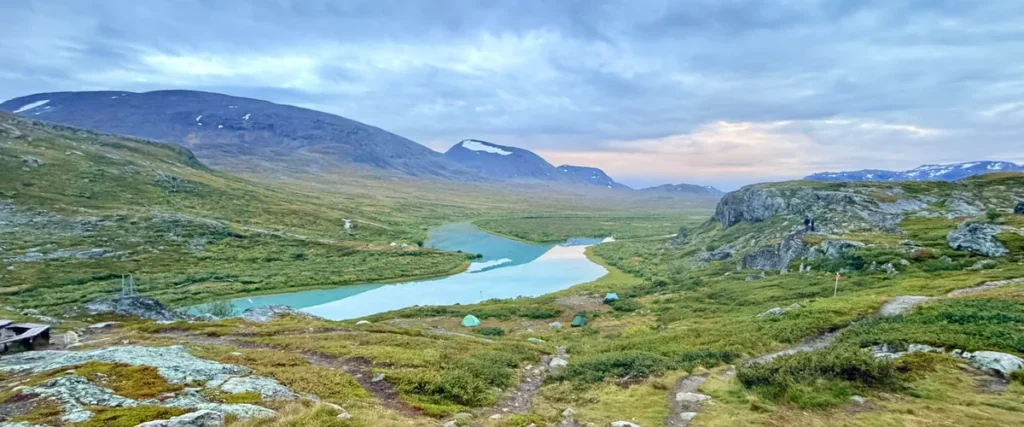
The flip side is that the best of Norway is outdoors and free. The right to roam, allemannsretten, lets you walk and camp on uncultivated land, which turns the expensive part of the country into the cheap part. A fjord viewpoint costs a bus fare. The hike that people fly in for costs nothing at the trailhead.
Trains are the other pleasant surprise. Bergen to Oslo is one of Europe’s better rail journeys, and booked early on Vy it can come in near €30. Booked the day before, it can be four times that: advance fares on that line currently sit around 299 to 359 kroner, while same-day and peak-date tickets run 900 to 1,400. Vy put ticket prices up an average of 3.8% in February 2026, which is modest next to what the exchange rate did.
One line item that hides inside the fare rather than appearing at the gate: Norway charges an air passenger tax on departures from Norwegian airports, NOK 61 per passenger to European destinations and NOK 350 to everywhere else in 2026, per the Norwegian Tax Administration. It is small against a long-haul ticket and noticeable against a cheap one-way to Copenhagen. Denmark charges its own version, 30 kroner within Europe and 260 or 320 further afield in 2026. Sweden scrapped its air passenger tax entirely on 1 July 2025, per Skatteverket, which is a small point in favour of routing a Nordic trip through Stockholm. Our Nordic road trip guide covers the driving alternative, including where a rental car stops making financial sense once you count ferries and fuel.
Four levers that move the number
Alcohol
This is the big one, and it is the reason most Nordic budget horror stories exist. Spirits and wine are sold through state monopolies in Norway and Sweden, Vinmonopolet and Systembolaget, with limited hours and no Sunday opening. Buying at the monopoly rather than drinking in bars roughly halves what you spend. Cutting bar nights from four to one over a week can save €100 or more on its own.
Where you eat, and when
Supermarket breakfast, lunch special, occasional restaurant dinner is the pattern that keeps the daily number in the ranges above. Flip it to restaurant lunch and restaurant dinner and you add €40 to €60 a day per person. Nordic supermarkets make this painless. The prepared food sections are better than the equivalent in most of Europe, and there is usually seating.
Transport passes
City passes in Copenhagen, Stockholm and Oslo pay for themselves at roughly three or four journeys a day, which is more than most travelers make. Do the arithmetic for your actual itinerary rather than buying the pass reflexively. Between cities, book long-distance rail two to four weeks out. Danish rail fares on DSB are steadier than the Norwegian and Swedish ones, so the early-booking payoff there is smaller.
Beds
The gap between a central hotel and a decent hostel private room is wider in the Nordics than in southern Europe, often €70 or more a night. Hostels here skew clean and well-run rather than party-oriented, so the trade-off is mostly about space. Our notes on finding good accommodation apply well in this region, where reviews reliably flag the tiny-room-for-a-big-price places.
A realistic week, priced two ways
Say you split a week between Copenhagen, Stockholm and Oslo, with trains between them booked a few weeks out.
The lean week: dorms or shared rooms, supermarket breakfasts, weekday lunch specials, two restaurant dinners across the whole week, drinks bought at the monopoly, two paid attractions total, plenty of walking. Roughly €670 to €830 for the week, plus about €90 to €140 in intercity trains.
The comfortable week: private budget rooms, a restaurant meal most days, a few bar evenings, four or five paid attractions, taxis when it rains. Roughly €1,130 to €1,500, plus trains.
The gap between those two weeks is about €500, and almost all of it sits in restaurants and bars rather than in beds or transport. That is the part of the Nordic budget you actually control.
Tipping is not the hidden cost people fear, incidentally. Service is included and rounding up is enough. Our European tipping guide covers how that differs from what North American visitors are used to.
Where people get the budget wrong
Two mistakes account for most blown Nordic budgets. The first is treating the region as one price level. Norway runs noticeably above Denmark and Sweden on food and drink, so an average built on Copenhagen numbers will under-count an Oslo leg by a meaningful amount.
One thing worth planning around rather than budgeting for: Norway now has a law allowing municipalities to charge a 3% visitor contribution on accommodation. It took effect on 1 July 2026, but no municipality can actually collect it before 1 January 2027, so it costs you nothing on a 2026 trip. Five have applied so far, including Tromsø and Vågan in Lofoten. Oslo and Bergen have not. Campervans, tents and boats are outside it. If you are pricing a northern trip for next year, add 3% to the beds and leave this year’s alone.
The second is under-budgeting the arrival day. You land, you are tired, you have not found the supermarket, and you eat two expensive meals near the station. Assume the first day costs 50% more than a normal one and the rest of the week feels easier.
If you want to see the real number before you commit, build the trip out leg by leg, with the specific nights and the specific train legs, rather than guessing at a daily average. That is the point where a Nordic week either fits your budget or clearly does not. You can put the whole route together in Lentii in an afternoon, share it with whoever is coming, and adjust the expensive days before anything is booked.
FAQ
Is Norway really that much more expensive than Denmark and Sweden?
On restaurants and alcohol, yes, commonly 25% to 40% higher, and the gap widened over the past year rather than holding steady. Norwegian restaurant and accommodation prices rose 5.7% in the twelve months to July 2026 while Danish consumer prices rose 1.7% and Swedish ones 0.3%, and on top of that the krone strengthened about 8% against the euro. For a euro-paying visitor the two together make Norway roughly 14% more expensive than a year ago. On accommodation and transport the gap is smaller. On outdoor activities Norway is often the cheapest of the three, because the main attraction is landscape you can walk into for free.
What is the cheapest month to visit the Nordics?
Late April to mid-May and September give you long daylight with shoulder-season prices. July is both the most expensive and the most crowded. Winter is cheap in the southern cities but not in the north, where northern lights season pushes prices back up.
Can you do the Nordics on €60 a day?
In Denmark and Sweden it is possible with dorms, self-catering, no bars and free attractions only. In Norway it is a stretch unless you are camping. €60 a day is a camping-and-hiking budget there rather than a city budget.