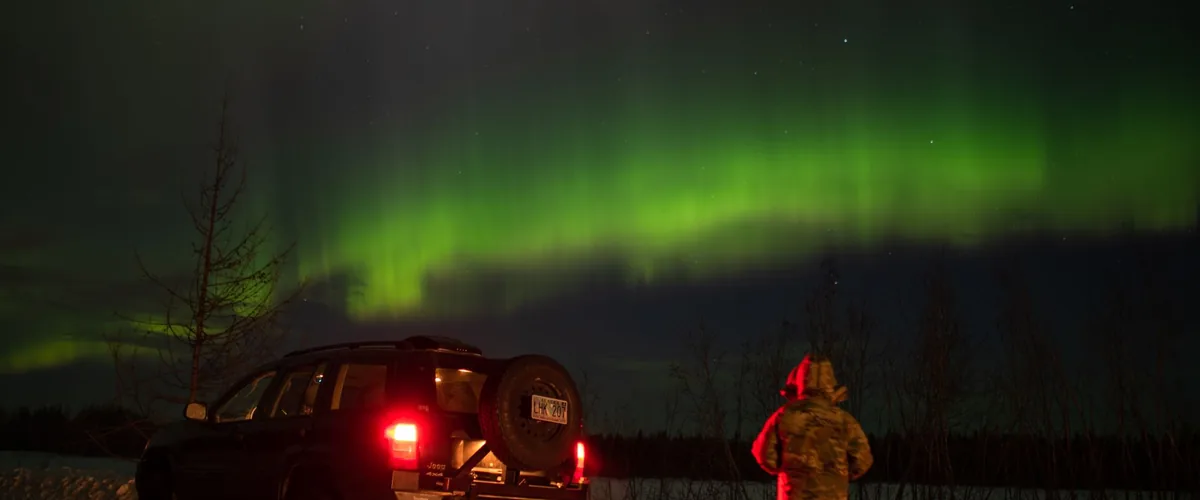
The aurora is one of the few travel attractions that can simply refuse to show up. You can book the right week, fly to the right latitude, and still spend three nights staring at cloud. That is the real planning problem, and it does have a solution: pick a base with decent odds, give yourself enough nights, and build a trip you would have enjoyed even if the sky stayed empty.
This is a planning guide, not a physics lesson. Here is when to go, where to base yourself in the Nordics, how many nights you actually need, and what the whole thing tends to cost.
When to go: the season in plain terms
The aurora happens year-round. You just cannot see it when the sky is bright, which rules out the Nordic summer entirely. Above the Arctic Circle the sun barely sets in June and July, so the viewing season runs roughly from late September to early April.
Within that window the months are not equal:
- Late September to October. Milder, wetter, and the lakes have not frozen yet, which gives you reflections. Nights are dark enough by mid-evening. A good choice if you dislike deep cold.
- November to January. The darkest stretch, with polar night at the northernmost bases. Long viewing windows, but also the cloudiest period on the Norwegian coast and the coldest inland.
- February to mid-March. The sweet spot for most travelers. Statistically clearer skies inland, enough daylight to do things, snow still deep enough for dog sledding and skiing.
- Late March to early April. Rapidly shortening nights, but often crisp and stable. Equinox periods tend to bring stronger geomagnetic activity.
One more thing worth knowing: solar activity runs on an eleven-year cycle, and the current cycle peaked in the mid-2020s. Activity stays elevated for a couple of years past a peak, so the next few winters are better than average. That is a reason to go sooner rather than in 2030.
Avoid the few nights around a full moon if you can. A bright moon will not hide a strong display, but it washes out the faint green arcs that make up most of what you will actually see.
If the Arctic is one leg of a longer trip, the rest of the continent runs on its own winter schedule. Our guide to what is open in Europe in winter maps which regions keep running from November to March and which ones close.
Summer gives the same places a different reason to visit. From late May to mid-July the sun barely sets over Abisko and Kiruna, and our Swedish Lapland summer itinerary covers both by night train and on foot.

How many nights you actually need
This is where most aurora trips go wrong. People book two nights, get clouded out, and fly home having seen nothing.
Three nights at a good base is the realistic minimum. Five is comfortable. With five nights in a decent location during the season, you are very likely to get at least one clear window, and clear is the only thing that matters — the aurora itself is active far more often than the sky is open.
Think of it as buying lottery tickets where each night is a ticket. Two tickets is a gamble. Five is a plan.
Where to base yourself
Four regions do most of the work. They are not interchangeable, and the right one depends on whether you want easy logistics, dry skies, or a specific kind of winter holiday.
Tromsø, Norway
The most convenient base in the Nordics. It sits at about 69°N, well inside the auroral zone, and it has an airport with direct flights from several European cities, real restaurants, and dozens of tour operators. You can land in the afternoon and be out chasing by nine.
The catch is coastal weather. Tromsø is genuinely cloudy, and a still evening in town says nothing about conditions an hour inland. The upside is that the road network lets guides drive toward whatever gap in the cloud the forecast shows, sometimes crossing into Finland to find it. If you go to Tromsø, take a chase tour rather than standing on the harbor hoping.
Abisko, Swedish Lapland
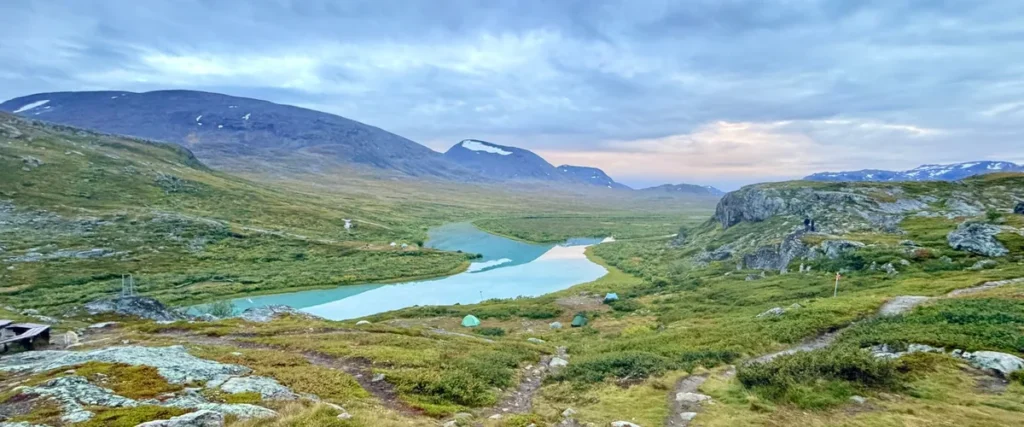
Abisko has a genuine geographic advantage. It sits in the rain shadow of the mountains along Torneträsk lake, which produces a persistent gap in the cloud that locals call the blue hole. It is the driest of the major bases, and people who care most about odds tend to end up here.
It is also small and remote. You arrive by train from Kiruna or Narvik, there is not much to do besides the mountain station and the chairlift up to the Aurora Sky Station, and dining options are limited. That is either the appeal or the problem, depending on your temperament.
Rovaniemi and Finnish Lapland
Rovaniemi sits right on the Arctic Circle at about 66°N, which is the southern edge of reliable viewing. You will see the aurora there on active nights, but not with the frequency you get 300 km further north. Push on to Saariselkä, Ivalo, or Utsjoki if the lights are the whole point.
What Finland does better than anywhere else is the surrounding holiday: glass igloos, husky farms, reindeer sledding, and the Santa Claus Village, which is why this is the standard choice for families. If you are traveling with children, the trade-off in latitude is usually worth it.
Iceland
Iceland sits at roughly 64°N, further south than the Lapland bases, and its weather is famously changeable. It compensates with mobility. You can rent a car, watch the forecast, and drive to a clear patch, and the landscape underneath the aurora is better than anywhere else on this list — waterfalls, black beaches, glacier lagoons.
Go to Iceland if you want a full road trip with aurora as the bonus. Go to Abisko if you want the aurora and will accept a quiet week to get it.
| Base | Latitude | Sky conditions | Best for |
|---|---|---|---|
| Tromsø, Norway | ~69°N | Often cloudy, but easy to drive out of it | Short trips, good flight links, city comforts |
| Abisko, Sweden | ~68°N | Driest of the major bases | Best raw odds, quiet trips |
| Finnish Lapland | ~66–69°N | Cold and often clear inland | Families, huskies, glass igloos |
| Iceland | ~64°N | Very changeable, drive to the gaps | Road trips and dramatic foregrounds |
Chasing or waiting: which tour to book
There are two ways to see the lights, and they suit different people.
Chase tours put you in a minibus with a guide who reads the cloud forecast at dinnertime and drives, sometimes for two or three hours, to wherever the sky is open. In Tromsø this is close to essential. Expect a long night, often getting back after one in the morning. Good operators cap group size and will cross the border into Finland if that is where the gap is.
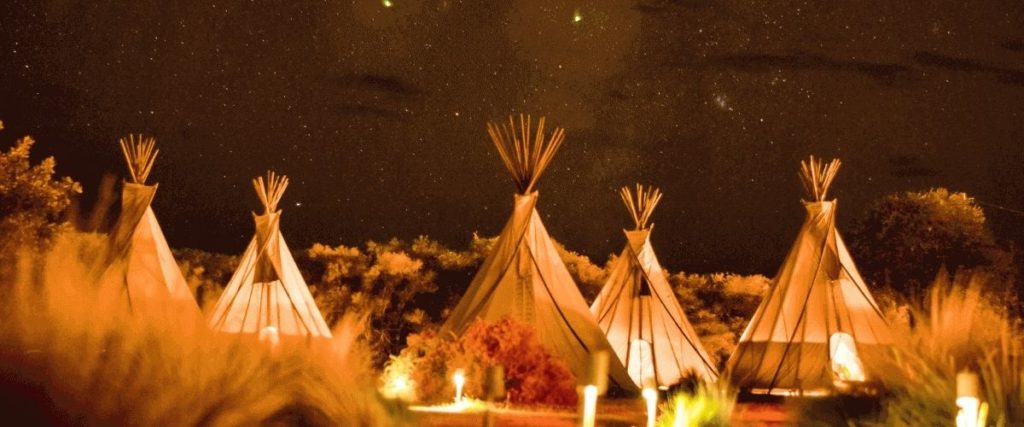
Camps and static viewing park you at a lodge, a lavvu with a fire, or a mountain station and let the sky come to you. Cheaper, warmer, far more comfortable, and entirely dependent on the weather where you happen to be sitting. This works well in Abisko, where the odds are already in your favor, and less well on the Norwegian coast.
A reasonable strategy for a five-night trip: book one chase tour early in the stay, keep two nights free to react to the forecast, and treat anything beyond that as a bonus. Do not book a tour every single night. You will be exhausted by night three.
Reading the forecast without losing your mind
Two numbers matter, and only one of them is under discussion most of the time.
The Kp index runs from 0 to 9 and describes geomagnetic activity. From Tromsø or Abisko, a Kp of 2 or 3 is plenty — you are already under the auroral oval. From Rovaniemi or Iceland you want 3 or above. Kp 5 and up is a storm, and on those nights the lights can reach as far south as Denmark or Scotland.
The cloud forecast is the one that decides your night. Aurora activity is common; clear sky is the constraint. Check a local meteorological service for hour-by-hour cloud cover rather than a generic weather app, which tends to smooth the detail you need.
For live conditions, the NOAA Space Weather Prediction Center publishes a 30-minute aurora forecast, and the Icelandic Meteorological Office runs a combined aurora and cloud-cover map that is useful even outside Iceland as a model of what to look for.
Set a rule for yourself before you arrive: check the forecast twice a day, at breakfast and around four in the afternoon, and otherwise leave it alone. Refreshing an app every twenty minutes is how people ruin a perfectly good holiday.
What it costs
Aurora trips are winter trips to expensive countries, and the numbers reflect that. Rough per-person figures for a five-night stay, excluding flights:
- Accommodation: around €90–160 per night for a mid-range hotel or guesthouse in Tromsø or Rovaniemi. Glass igloos and wilderness lodges run considerably higher, often €300 and up.
- Chase tours: roughly €100–180 per person per night, depending on group size and whether food is included.
- Daytime activities: a half-day dog sledding or snowmobile trip is commonly €120–200.
- Food: budget €50–80 a day if you eat out. Norway is the most expensive of the four; Finland is noticeably gentler.
- Warm clothing rental: €25–40 per day, and worth it if you do not own genuine Arctic gear.
Two ways to bring that down. First, fly midweek and in the shoulder weeks of the season — late September and late March are meaningfully cheaper than the Christmas and February half-term peaks. Our guide to finding cheap flight tickets covers the timing side of that. Second, self-cater. Nordic supermarkets are good, and a rental apartment cuts the biggest variable cost. If you are weighing options, our notes on finding good accommodation apply doubly here, because location relative to light pollution matters as much as price.
What to do in the daylight
You will have four to six hours of usable light in midwinter, and you should have a plan for them. This is also your insurance policy: if the aurora never appears, the trip still has to be worth the airfare.
Dog sledding is the one most people remember. Reindeer sledding and Sámi cultural visits are widely available in all three Lapland regions and are worth choosing carefully — look for operators run by Sámi families rather than staged versions. Snowmobiling covers ground fast. Ice fishing is slower and better than it sounds.
If you ski, several aurora bases sit close to real slopes, and combining the two makes the daylight hours easy to fill — our roundup of the best ski resorts in Europe includes options within reach of the northern bases. Summer hikers may recognize some of the same terrain from our list of top multi-day hikes, including the Kungsleden, which starts at Abisko.
One practical note on getting around: the Nordic rail network is genuinely good, and the overnight train from Stockholm to Abisko or Narvik is a pleasant way to arrive. If you are traveling on a rail pass, our explainer on what interrailing involves covers how the passes work on Nordic routes.
Coming back in summer instead? Sweden, Norway and Finland let you pitch a tent on most open land, and our guide to wild camping in Scandinavia explains how far that right goes in each.
Packing for the actual temperature
Standing still outdoors at −20°C for two hours is a different problem from walking around a cold city. The mistake is dressing for the temperature instead of for the standing.
Layer properly: wool or synthetic base layer, fleece or down mid-layer, windproof outer shell, and insulated trousers over the top. Bring boots rated well below the temperature you expect, two pairs of gloves so you can swap when one gets damp from handling a camera, and chemical hand warmers. Most tour operators lend or rent full thermal suits, which is the simplest answer if you are only going once.
For photography: a tripod is not optional, and cold drains batteries fast, so keep spares in an inside pocket against your body. Recent phones handle the aurora surprisingly well in night mode if you can brace them, though a real camera with a fast wide lens is still better.
Put the trip together
An aurora trip has more moving parts than a normal city break: flights into a small airport, a base chosen on weather rather than sights, tours booked against a forecast, and daylight activities that have to hold the trip up on their own. That is a lot to keep in a notes app.
Lentii is built for exactly this kind of planning. Save lodges, tours, and routes as you research them, arrange them into a day-by-day itinerary, and share the whole thing with whoever you are traveling with so nobody has to ask which night the dog sledding is. Start building your northern lights itinerary with Lentii.
FAQ
What is the best month for a northern lights trip?
February and early March suit most travelers. Skies inland are statistically clearer than in midwinter, there is enough daylight to do things, and the snow is still deep. If you want the darkest possible nights and do not mind the cold, aim for December or January instead.
How many nights do I need to be confident of seeing the aurora?
Plan for at least three nights at a base inside the auroral zone, and five if your schedule allows. The aurora is active far more often than the sky is clear, so the number of nights you spend waiting is the single biggest factor in whether you see it.
Can you see the northern lights from a city?
Sometimes, during strong geomagnetic storms, but you should not count on it. Street lighting drowns out the faint displays that make up most sightings. Even a 20-minute drive out of Tromsø or Rovaniemi makes a substantial difference, which is why nearly every operator takes you out of town.