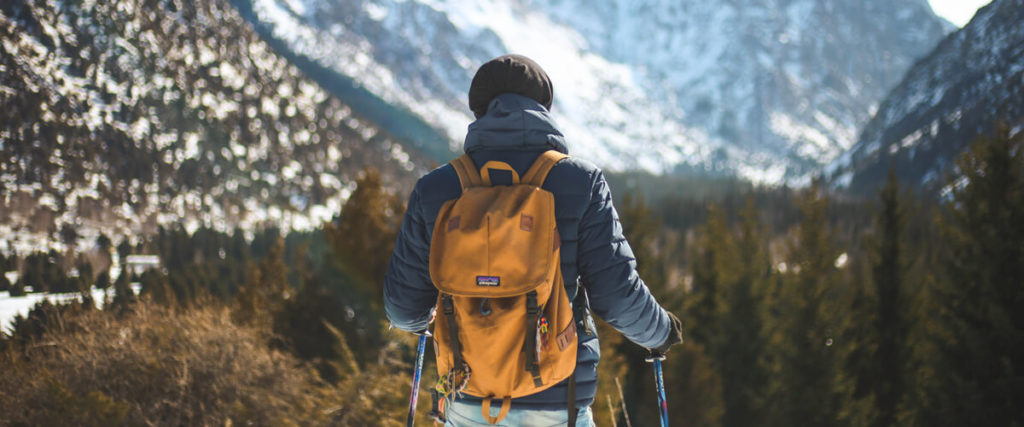
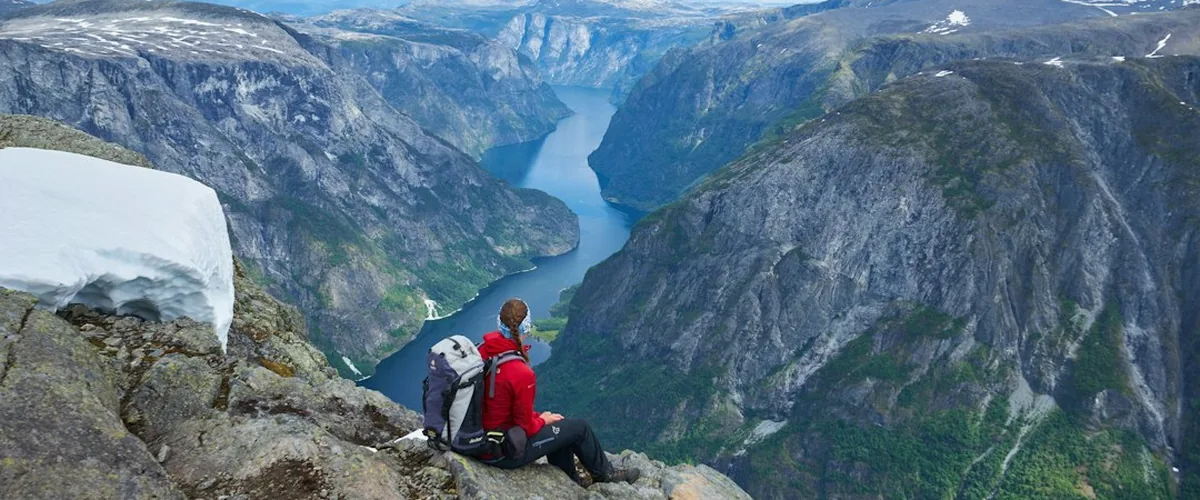
In Sweden, Norway and Finland you can walk across most open land, pick blueberries off the ground and sleep in a tent by a lake without asking anyone. It’s called the right to roam, and it’s the reason wild camping in Scandinavia is so easy compared with most of Europe.
It is not a free-for-all, though. Each country writes the rules a little differently, campfires are a separate question, and a camper van is not a tent. Here is what you can actually do in each country, where the limits are, and how to plan a trip around it.
What the right to roam actually means
The idea is old and shared across the region. In Swedish it’s allemansrätten, in Norwegian allemannsretten, in Finnish jokamiehenoikeus. Roughly, it gives everyone the right to move through the countryside on foot, stay there for a short time and gather berries and mushrooms, whoever owns the land.
The deal is that you don’t cause damage or disturb anyone. Sweden’s Environmental Protection Agency sums up the spirit as “don’t disturb, don’t destroy.” That one rule explains most of the specific limits: stay out of sight of homes, keep off fields and gardens, don’t cut living trees, take your rubbish home.
Three things it generally does not cover:
- Motor vehicles. The right applies to people on foot, on skis, by bike or by canoe. Driving off-road and parking a camper van wherever you like are separate matters, governed by traffic and local rules.
- Private gardens and farmland. The land right around someone’s house, fields with crops and fenced pasture are off limits.
- Protected areas with their own rules. National parks and nature reserves often restrict camping and fires to marked sites. Always check the signs at the entrance.

Sweden: one or two nights, out of sight
Sweden is the most relaxed of the three and the easiest place for a first wild camping trip. According to the Swedish Environmental Protection Agency, you can pitch a tent for a night or two, and “one or two nights is the rule of thumb.” There is no fixed distance from houses. The test is that people living nearby shouldn’t be able to see or hear you from their home and the area around it.
A few specifics worth knowing:
- Two or three tents is fine. A larger group should ask the landowner first.
- Pick solid ground and stay off land used for grazing or crops.
- Many municipalities ban tents in parks and sports grounds, so this is a countryside right, not a city one.
- Fires are allowed when it is safe, and you carry full responsibility. Use gravel or sand, keep it small, keep it away from rock faces, which crack, and use fallen twigs rather than bark or live branches. In dry summers, regional fire bans are common and apply to everyone. The agency’s page on lighting fires has the details.
Norway: the 150-meter and two-night rules
Norway writes its right to roam into law, the Outdoor Recreation Act, and gives you clearer numbers. The Norwegian Environment Agency sets out the basics:
- Camp at least 150 meters from an inhabited house or cabin.
- Stay up to two nights in the same spot. Longer needs the landowner’s permission, except in the high mountains or far from any settlement, where you can stay on.
- The right applies on uncultivated land, called utmark. Fields, meadows and private plots, called innmark, are excluded.
Fires are where Norway is strict. From 15 April to 15 September, open fires in or near forest and other uncultivated land are banned unless the local council allows it. The exception is a fire that obviously can’t spread, such as a small one at the water’s edge or on snow. Gas stoves are allowed all year. Some councils add a total fire ban on top during dry spells, so check locally.
Norway is also the country where a car changes things most. Plenty of travelers do a Norway trip by road. If that’s you, read our guide to Nordic road trip routes, costs and timing, and plan nights at campsites or designated parking areas rather than assuming the right to roam covers a van.
Finland: tent yes, campfire no
Finland gives you the same freedom to walk, pick berries and mushrooms and stay overnight. Finland’s Ministry of the Environment describes camping as staying temporarily at a reasonable distance from people’s homes, without digging, felling trees or otherwise damaging the land.
The big difference is fire. As Visit Finland puts it, building a campfire is not part of everyman’s rights. You need the landowner’s permission, and in national parks fires are only allowed at marked fire sites. During a grass or forest fire warning, open fires are forbidden altogether. Check the Finnish Meteorological Institute’s warnings before you go. A camping stove is the normal way to cook.
The good news is Finland’s network of national park facilities. Over 40 parks have marked trails, and many have unlocked wilderness huts and lean-to shelters with fire rings, free to use on a first-come basis. On a busy evening the custom is to make room for whoever arrives last.
One small catch: the Åland Islands have their own rules, so don’t assume mainland practice applies there.
Denmark and Iceland: the exceptions
Denmark and Iceland are Nordic but don’t share the same broad right to camp.
Denmark has no general right to pitch a tent on any open land. What it has instead is a free camping scheme in state forests, run by the Danish Nature Agency. In the designated forests you can stay one night, with at most two tents, each sized for up to three people. The tent has to be under the trees and out of sight of paths, roads and buildings, which rules out beaches and dunes. Fires only in the fixed fire pits. There are also hundreds of small, free primitive campsites and shelters across the country, which are often the better option. If you’re starting a trip in the capital, our Copenhagen 3-day itinerary is a good base before heading out.
Iceland tightened its rules in 2015. The Environment Agency of Iceland says sleeping in a camper van, caravan or tent trailer outside an organized campsite is illegal without the landowner’s permission. Tents have a little more room: up to three tents on uncultivated land for a single night, unless the landowner has posted otherwise and as long as you’re not near a farm. Several popular areas, including Thingvellir National Park, ban camping outside campgrounds entirely.
The rules side by side
| Country | Tent in the wild | How long | Campfires | Camper vans |
|---|---|---|---|---|
| Sweden | Yes, out of sight and hearing of homes | 1–2 nights | Allowed when safe, unless a fire ban applies | Not covered |
| Norway | Yes, 150 m from houses, uncultivated land | 2 nights, longer in remote mountains | Banned near forest 15 Apr–15 Sep | Not covered |
| Finland | Yes, reasonable distance from homes | Temporary stay | Landowner’s permission or marked sites | Not covered |
| Denmark | Only in designated state forests | 1 night | Fixed fire pits only | No |
| Iceland | Up to 3 tents on uncultivated land | 1 night | Check local rules | Campsites only |
How to plan a wild camping trip in Scandinavia
The freedom is real, but a good trip still needs a plan. Wild camping works best as part of a route, not instead of one.
Pick the season
June to August gives you long light, especially in the north, where it barely gets dark around midsummer. It also brings mosquitoes, which in Lapland and inland Sweden can be fierce in July. Late August and September are calmer, cooler and bring the berry season. If you’re aiming for the northern lights instead, you’ll want darker nights from autumn on, and probably a cabin rather than a tent. Our guide to a northern lights trip in the Nordics covers timing.
Mix wild nights with paid ones
Two or three nights in a tent, then a campsite or hostel to shower, charge your phone and dry your gear. That rhythm keeps a trip comfortable for a week or two. If you’d like a softer start, budget glamping is a halfway option.
Get there without a car
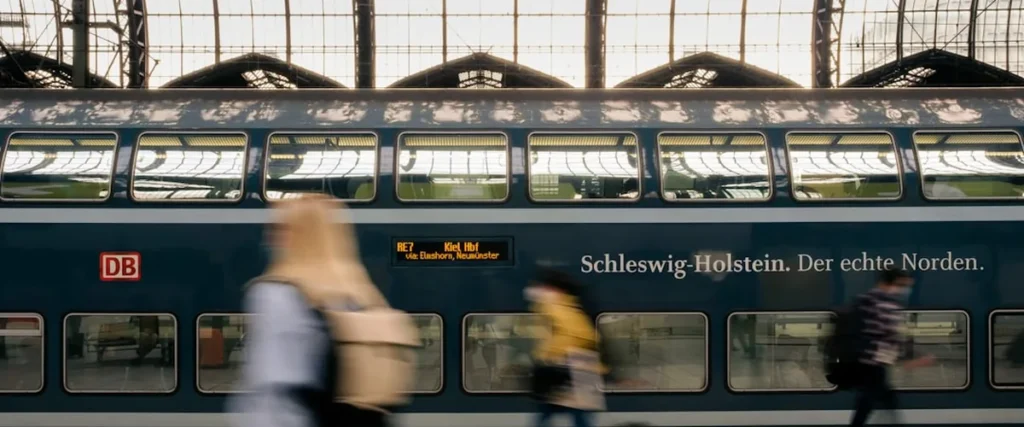
Night trains run from Stockholm to the far north of Sweden, and Norway’s rail lines reach trailheads in the mountains. A train and a pair of boots is a perfectly good way to do this. Our guide to night trains in Europe lists the routes.
Know the trail options
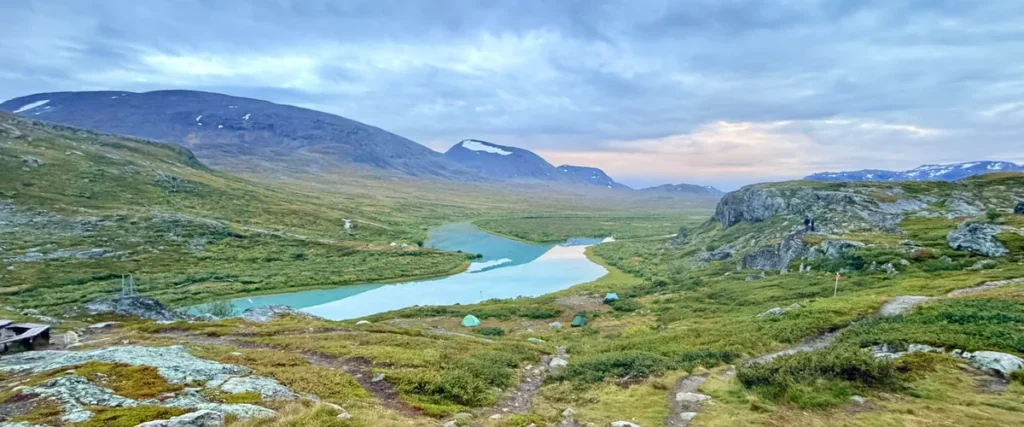
Long-distance routes like Sweden’s Kungsleden have huts and marked campsites along the way, which makes them a good first multi-day hike. See our list of multi-day hikes for more.
The Kungsleden starts at Abisko Turiststation, right by the railway. Our Swedish Lapland summer itinerary shows how to get there without a car and fit the first stage into a short trip.
Leave no trace, Nordic style
The right to roam survives because most people use it well. Locals notice when visitors don’t.
- Take every piece of rubbish home, including food scraps and toilet paper.
- Dig a small hole for toilet use, well away from water, and cover it.
- Don’t wash with soap in lakes or streams. Carry water a few meters away.
- Close gates behind you and give grazing animals, including reindeer in the north, plenty of space.
- Pick berries and mushrooms for eating, not for selling by the bucket, and leave protected plants alone.
- If the fire risk is high, skip the fire. A stove cooks dinner just as well.
Keep the rules with the route
The trickiest part of a multi-country Nordic trip is that the rules change at the border. What’s fine in Sweden on Tuesday can earn you a fine in Iceland or a talking-to in Denmark the following week. In Lentii you can build the route stop by stop and add a note to each day, such as “fire ban from 15 April” for the Norway leg or “designated forest only” for Denmark, so the right rules show up on the right night for everyone on the trip.
FAQ
Is wild camping legal in Scandinavia?
Yes in Sweden, Norway and Finland, under each country’s right to roam, as long as you keep away from homes, stay off cultivated land and move on after a night or two. Denmark only allows it in designated state forests, and Iceland limits it to tents for one night.
Can I sleep in a camper van anywhere in Norway or Sweden?
No. The right to roam covers people on foot, not vehicles. Use campsites, designated parking areas or places where the landowner has given permission, and check local signs.
Can I light a campfire when wild camping?
It depends on the country and the season. Sweden allows fires when it’s safe and there is no ban. Norway bans fires near forest from 15 April to 15 September. Finland requires the landowner’s permission or a marked fire site. A gas stove is the safe choice everywhere.