
Five days is enough for Norway if you pick one corridor and stay on it. The mistake is trying to add the Lofoten Islands or Tromsø to a short trip, which turns half your vacation into airports. This Norway 5 day itinerary runs Oslo to Bergen the long way, through the Hardangervidda plateau, down the Flåm Railway and out onto the Nærøyfjord.
Everything below moves by train, boat and one bus. No rental car, no domestic flights. The route works in reverse too if your flights are cheaper into Bergen.
Why this order works
The Bergen Line already goes where you want to go. It climbs from Oslo to about 1,200 meters at Finse, crosses bare plateau that still holds snow in June, and drops toward the coast. Myrdal station sits on that line, and the Flåm Railway branches straight down from it to the water. So the scenic detour costs you almost nothing in backtracking.
Running Oslo first also gets the expensive city out of the way while you still have energy for it, and puts Bergen at the end where the ferries and the airport are. Seat 61’s Norway rail guide has the current timetables and booking windows if you want to check departures before committing to dates.

Day 1: Oslo
Arrive, drop bags, and do one thing properly rather than four things badly. The Astrup Fearnley Museum and the harbor promenade at Aker Brygge fill an afternoon. The Viking Ship Museum has been closed for a long rebuild, so check its status before you plan around it.
If the weather cooperates, the Bygdøy peninsula is a 15-minute ferry from City Hall and holds the Fram Museum, which is one polar exploration ship you can walk inside. In the evening, Grünerløkka has the bars and the food halls, and Mathallen is the easy option if you cannot decide.
Book the next morning’s Bergen Line seat before you go to bed. The good departures fill up in summer.
Day 2: the Bergen Line and the Flåm Railway
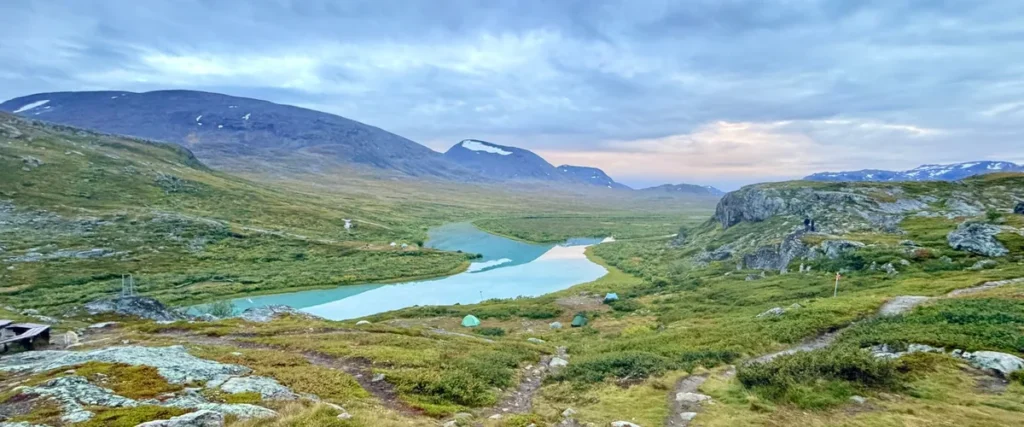
Take a morning train from Oslo S toward Bergen and get off at Myrdal, roughly 4 hours 40 minutes in. The first two hours are farmland and forest. After Geilo the trees stop, the line climbs onto the plateau, and around Finse you are in a landscape of rock, snowfields and meltwater with no roads in sight. Finse has no road access at all, which is why the Empire Strikes Back crew filmed Hoth there.
At Myrdal you change to the Flåmsbana. It covers 20 kilometers and drops about 865 meters in under an hour, on gradients steep enough that it is regularly listed among the steepest standard-gauge railways anywhere. The train stops at Kjosfossen waterfall for photographs in summer. The Flåm Line’s technical history is genuinely interesting if you like that sort of thing: it took two decades to build and most of the tunnels were cut by hand.
Sleep in Flåm or in Aurland, six kilometers up the fjord. Flåm is closer to the boats and busier with cruise passengers. Aurland is quieter and cheaper.
Day 3: Nærøyfjord and the Stegastein viewpoint
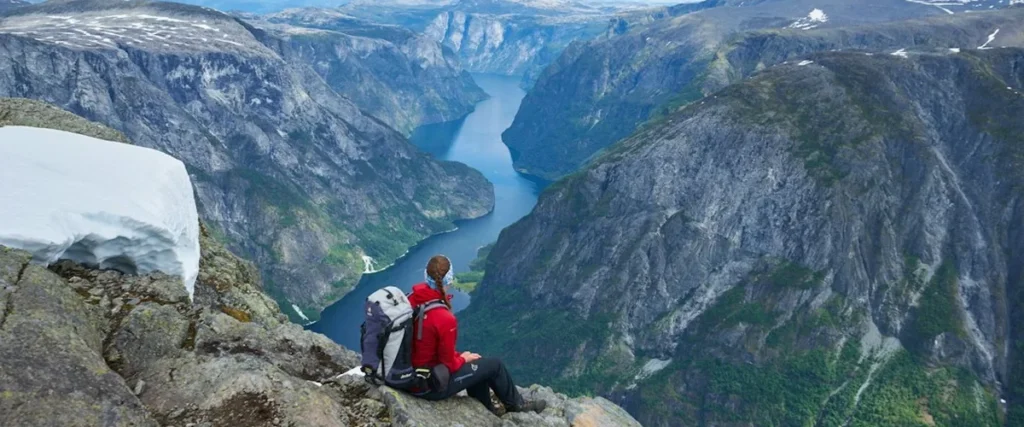
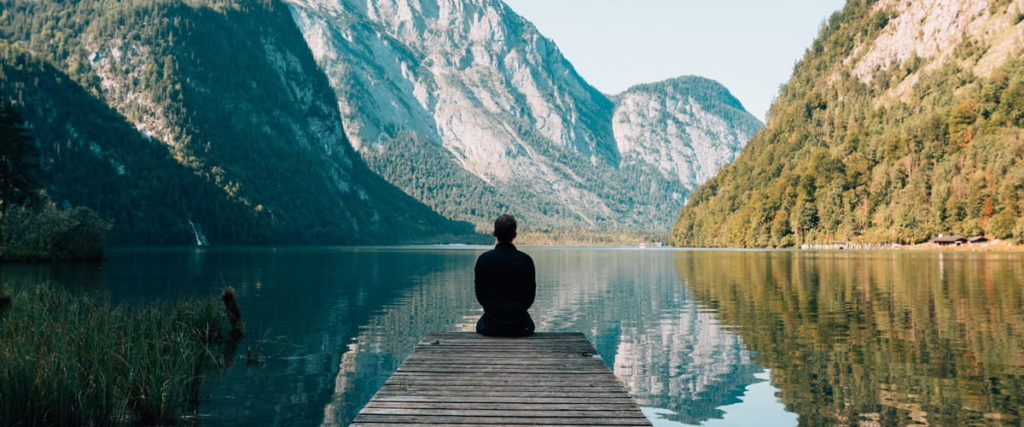
Morning is the fjord cruise from Flåm to Gudvangen, about two hours through the Aurlandsfjord and then into the Nærøyfjord. The Nærøyfjord narrows to roughly 250 meters across with walls over a kilometer high, and it is UNESCO listed along with the Geirangerfjord. Several of the boats on this run are electric, so the loudest thing you hear is water.
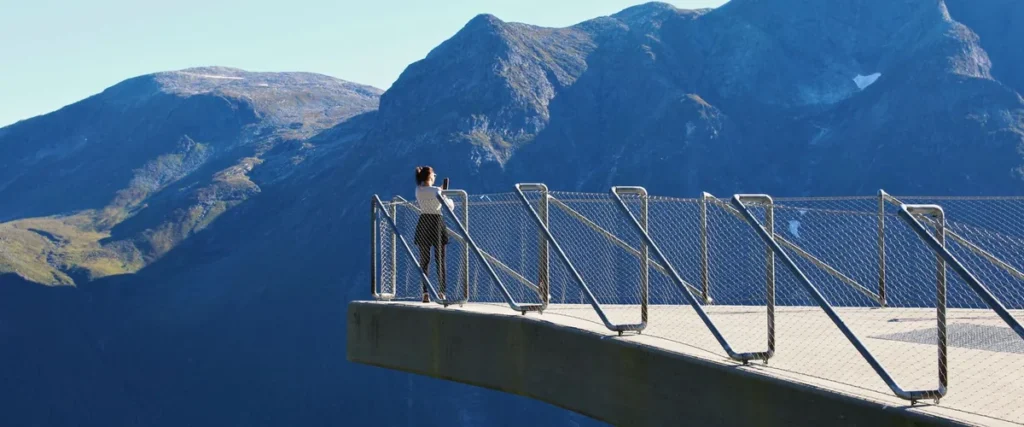
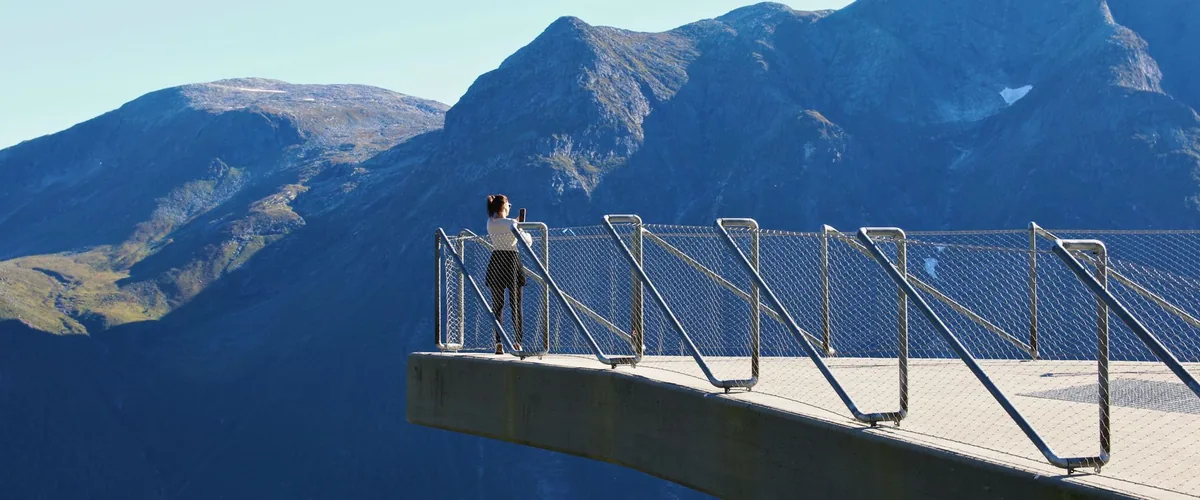
In the afternoon, take the bus up to Stegastein. The viewing platform hangs 650 meters above the Aurlandsfjord on a road of switchbacks, and it is the view that ends up on everyone’s camera roll. Dress warmer than you think; the temperature drops noticeably on the way up.
If you would rather trade the viewpoint for a walk, the old Aurlandsdalen valley trail runs down toward Vassbygdi and takes most of a day.
Day 4: over to Bergen
From Gudvangen, a bus climbs to Voss in about an hour and a quarter through the Stalheimskleiva switchbacks. From Voss, the train into Bergen takes a little over an hour along the Sørfjord.
That leaves you an afternoon in Bergen. Start at Bryggen, the row of leaning wooden trading houses on the old wharf, also UNESCO listed and still standing after a long series of fires that took most of the rest of the medieval city. The alleys behind the facade are the interesting part, not the harbor-front photo.
Then ride the Fløibanen funicular up Mount Fløyen for the view back over the harbor, and walk down through the woods if your knees are willing. It takes about 45 minutes.
Day 5: Bergen, and out
The Fish Market is more tourist attraction than market these days; the indoor Mathallen next door is where the food is actually good. Bergen’s aquarium, the Hanseatic Museum and the KODE art museums are all walkable, and the composer Edvard Grieg’s house at Troldhaugen is a short bus ride with lunchtime piano recitals in summer.
Bergen will rain on you. It sits among the wettest cities in Europe, with rain on well over half the days of the year, and locals treat it as weather rather than a problem. Pack a shell, not an umbrella, because the wind off the harbor destroys umbrellas. The Norwegian Meteorological Institute forecast is the one everybody actually checks.
Bergen airport is 30 minutes from the center on the light rail, which makes an evening flight easy.
The five days at a glance
| Day | Base | Main move | Time in transit |
|---|---|---|---|
| 1 | Oslo | Arrival, city center | Under 1 hour |
| 2 | Flåm or Aurland | Bergen Line to Myrdal, then Flåmsbana | About 6 hours |
| 3 | Flåm or Aurland | Fjord cruise, Stegastein | About 3 hours |
| 4 | Bergen | Bus to Voss, train to Bergen | About 2.5 hours |
| 5 | Bergen | City, then departure | 30 minutes to airport |
What it costs
Norway is expensive and pretending otherwise helps nobody. A restaurant main course usually runs somewhere around 250 to 350 NOK, a beer 100 to 130 NOK, and a mid-range hotel room in Bergen or Oslo often sits between 1,300 and 2,000 NOK a night in summer.
The transport on this route is the part people underestimate. The Flåm Railway is a premium ticket rather than an ordinary train fare, and the Flåm to Gudvangen cruise is priced similarly. Between the Oslo train, the Flåmsbana, the boat, the bus and the Voss train, budget a few thousand kroner per person for the moving parts alone.
Two ways to cut it. Book the Oslo to Myrdal leg early, since Norwegian rail sells cheaper advance fares that vanish close to departure. And if you hold an Interrail or Eurail pass, it covers the main rail legs and usually gets you a discount on the Flåm Railway rather than free travel, which still adds up. Our interrailing guide explains how the passes work.
Accommodation in Aurland instead of Flåm saves real money, as does eating one main meal a day out and buying the rest from a Kiwi or Rema 1000. For more on keeping beds cheap, see our notes on finding cheap accommodation.
When to go
June to early September gives you long daylight, running boats and open hiking trails. Late June has the most light and the most cruise passengers in Flåm at the same time.
May and late September are quieter and cheaper, with snow still on the plateau in May and fall color in the valleys by the end of September. Some trails and bus routes have not opened or have already closed.
Winter works if you want it to. The Bergen Line and the Flåm Railway both run year-round, the fjords do not freeze, and the plateau crossing in snow is spectacular. You lose daylight and most of the boat schedule.
What to leave out
Geiranger. It is the fjord everyone has seen photographs of, and reaching it from this corridor eats a full day each way. If Geiranger is the point of your trip, build a different route around Ålesund instead.
Preikestolen and Trolltunga. Both are worth doing and neither fits in five days alongside Bergen. Trolltunga alone is a 10 to 12 hour hike.
A rental car. On this specific route the car sits in a parking lot while you are on a train or a boat, and Norwegian fuel and tolls are not cheap. If you do want to drive Norway, our guide to Nordic road trip routes, costs and timing covers where a car earns its keep.
Putting it together
The hard part of this trip is not choosing the sights. It is holding the connections together: the Myrdal change, the boat departure, the Gudvangen bus, and the hotel that has to be in the right one of two villages. Get one of those wrong and the day unravels.
Building it as an actual day-by-day plan with times attached is what Lentii does. Add the stops, set your nights, keep the links and bookings in one place, and share the whole thing with whoever is coming. If you are still deciding where in Scandinavia to spend your week, our Stockholm and Copenhagen comparison is a useful place to start.
FAQ
Is 5 days enough for Norway?
For one region, yes. Five days covers Oslo, the Bergen Line, the Flåm Railway, a fjord cruise and Bergen without rushing. It is not enough to add northern Norway, the Lofoten Islands or Geiranger, and trying to do so means spending two of your five days in transit.
Should I do Oslo to Bergen or Bergen to Oslo?
Either works, and the deciding factor is usually your flights. Oslo first has one small advantage: you reach the fjords on day two with the trip still ahead of you, rather than finishing on a long train back east.
Do I need to book the Flåm Railway in advance?
In summer, yes. It is one of the busiest tourist trains in the country and departures that connect neatly with the Bergen Line sell out days ahead in July and August. Outside the summer season you can usually buy on the day, but the timetable thins out, so check the connection at Myrdal before you rely on it.