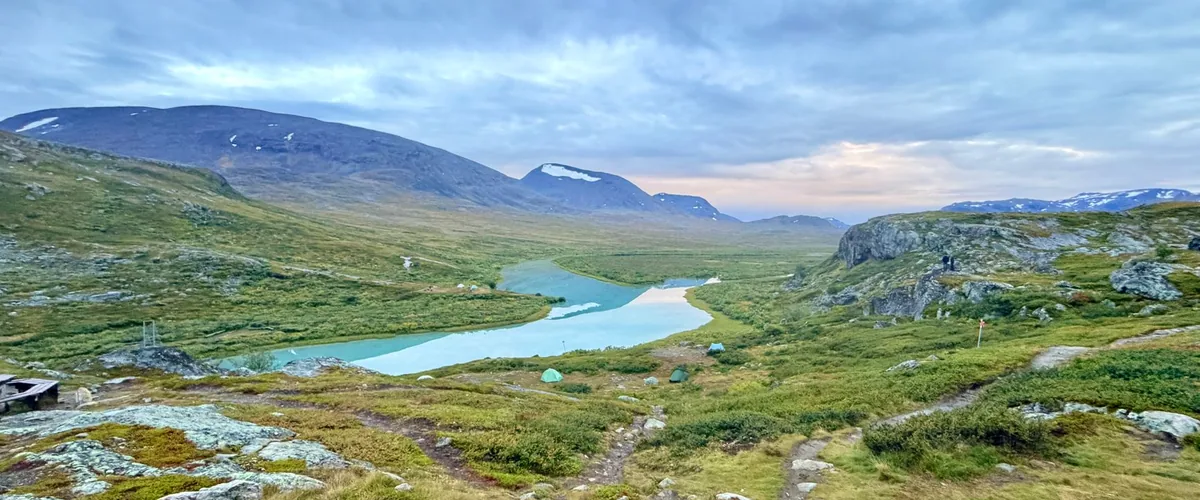
Swedish Lapland in summer is the same landscape people fly in to see the northern lights, except the sky never goes dark and the trails are clear of snow. From late May to mid-July the sun circles the horizon instead of setting, and you can start a hike at 9pm without a headlamp. The good news for anyone without a driver’s license or a rental budget: the core of the region is strung along one railway line, and you can see most of it with a train ticket, a bus pass and decent boots.
This itinerary covers six to eight days, starting and ending in Stockholm, built around Kiruna and Abisko. It assumes you want a mix of easy walks and one or two longer days on foot, and that you would rather not spend half the trip behind a wheel.
When the midnight sun actually happens
“Summer” in the far north is short. The window that matters is the midnight sun period, and it depends on how far north you stand. According to the Swedish Tourist Association, Abisko gets roughly 25 May to 17 July, while Kiruna, a little further south, gets about 28 May to 14 July. Outside those dates you still get very long, bright evenings in June and August, just with a short dip of dusk around midnight.
Each part of the season has a catch:
- Late May to mid-June: midnight sun, but snow can linger on higher ground and some mountain huts and buses have not started their summer schedules yet.
- Mid-June to mid-July: the sweet spot for light and access. Most seasonal services run. This is also mosquito season, so pack repellent and a head net if you plan to sit still near water.
- Late July to August: the sun sets again, the bugs ease off, and the first autumn color starts to show in the birch forest by late August. Good if you care more about hiking than about the sun itself.
If seeing the sun at midnight is the whole point, aim for the last week of June or the first week of July. That gives you a buffer for a cloudy night or two.

Getting there without a car: the night train
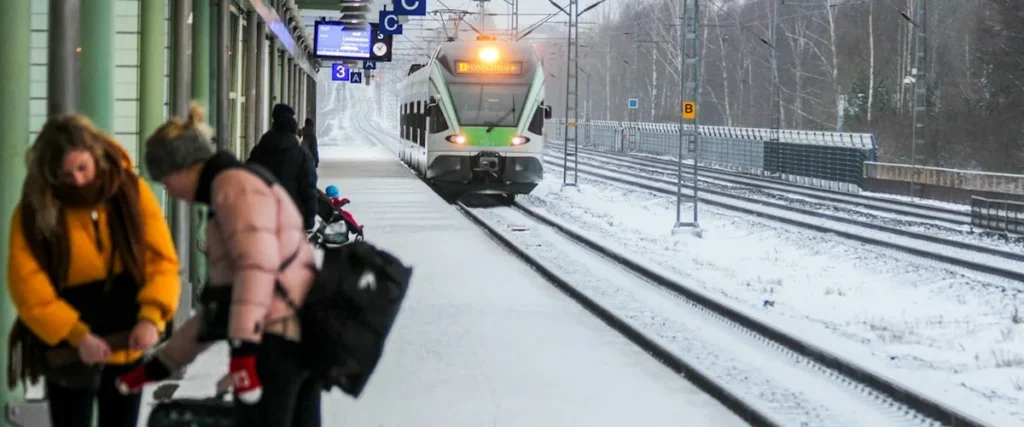
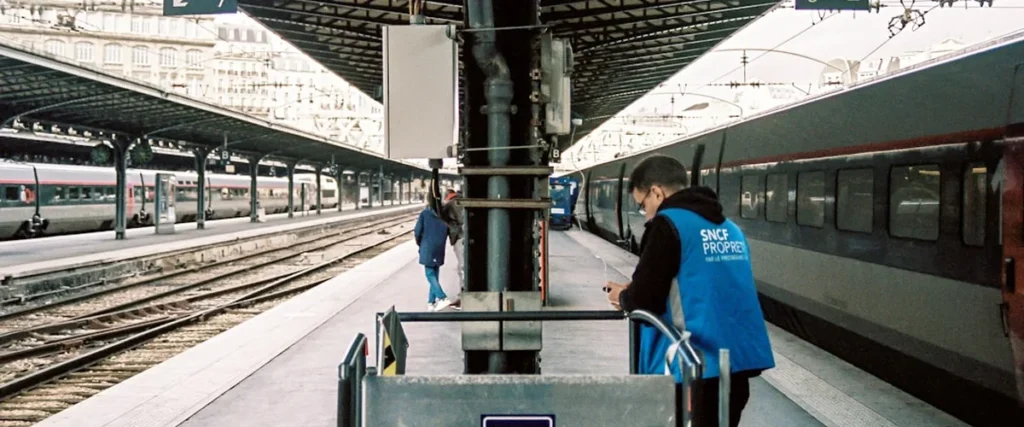
The simplest way north is the night train from Stockholm to Narvik in Norway, which runs every night and is operated by SJ. It runs up through eastern Sweden and then follows the iron ore railway through Kiruna and Abisko before crossing the border. The trip takes roughly 17 hours from Stockholm to Abisko, so you board in the early evening and wake up somewhere above the Arctic Circle. Kiruna Lappland’s train page lists the current options, and you book through SJ.
A few practical points:
- Book a couchette or sleeper early for June and July. Seats are cheaper, but 17 hours upright is a poor start to a hiking trip. Our guide to night trains in Europe covers what each class is like.
- Abisko has two stations. Abisko Östra is the village. Abisko Turiststation is a short distance west, next to the Swedish Tourist Association lodge and the start of the Kungsleden trail. Pick the stop that matches where you are sleeping.
- Daytime trains also run north with Norrtåg from Sundsvall, if you want to break the journey in a coastal town.
Flying into Kiruna is faster, but you lose the slow reveal of the landscape and add a transfer at each end. If you are weighing it up, our train vs plane comparison walks through the door-to-door math.
The itinerary at a glance
| Day | Base | Main plan | Getting around |
|---|---|---|---|
| 0 | Train | Evening departure from Stockholm | Night train |
| 1 | Kiruna | Arrive, walk the new town center, see the relocated church | On foot |
| 2 | Kiruna | Jukkasjärvi and Icehotel 365 | Local bus or tour |
| 3–4 | Kebnekaise (optional) | Nikkaluokta to Kebnekaise mountain station and back | Seasonal bus, boat, on foot |
| 5 | Abisko | Train west, canyon walk, Nuolja chairlift at night | Train, chairlift |
| 6 | Abisko | Long day toward Lapporten, or Kungsleden’s first stage | On foot |
| 7 | Train | Optional hop to Narvik, then night train south | Train |
Drop the Kebnekaise days and you have a comfortable five-day loop. Keep them and you have a proper mountain trip.
Days 1–2: Kiruna, a town that moved
Kiruna is a mining town first, and that is what makes it interesting. The iron ore mine under the old center has been causing the ground to subside, so the town is being rebuilt a few kilometers east. The most striking piece of that move happened in August 2025, when the wooden Kiruna Church, built between 1909 and 1912, was rolled about five kilometers across town on giant trailers over two days. The mining company LKAB has a page on the church move with photos and the background. Standing next to a 672-ton church that was on wheels a short time ago is a strange experience.
Spend the first day on foot. Walk between the new center and the church, find somewhere for a late lunch, and get used to the light. Your body will not want to sleep at 11pm when it looks like late afternoon outside, so bring an eye mask.
On day two, head 17 km out to Jukkasjärvi on the Torne River. The famous winter Icehotel melts back into the river every spring, but Icehotel 365 is a permanent building kept at around minus five degrees year-round, partly powered by solar panels that soak up the midnight sun. You can visit on a day ticket or book a night in one of the ice suites. Walking out of a frozen room into a warm summer evening is the kind of contrast you only get up here.
Days 3–4: Kebnekaise, if you have the legs
Kebnekaise is Sweden’s highest mountain, and you do not need to summit it to enjoy the trip. In season, the Nikkaluoktaexpressen bus runs from Kiruna to Nikkaluokta, about 70 km away, in roughly an hour to an hour and a half. From there, a 19 km trail leads through birch forest and up a valley to the Swedish Tourist Association’s Kebnekaise mountain station. Estimates for the walk range from five to eight hours depending on pace and stops. Kiruna Lappland’s Nikkaluokta page has the current bus and boat details.
Two shortcuts make this easier than it sounds. A boat crosses lake Láddjujávri from mid-June to mid-September and cuts about 6 km off the walk each way. And the bus only runs when the mountain station is open, so you will not get stranded by a closed lodge.
The summit itself is a different matter. The eastern route crosses a glacier and involves easy rock climbing, so people do it with a guide. The western route is longer and non-technical but still a very long day with roughly 1,800 meters of climbing. If that sounds like too much, walk in, sleep at the station, take a short hike up the valley, and walk out the next day. You will still have spent two days in genuine mountain country.
Days 5–6: Abisko under the midnight sun
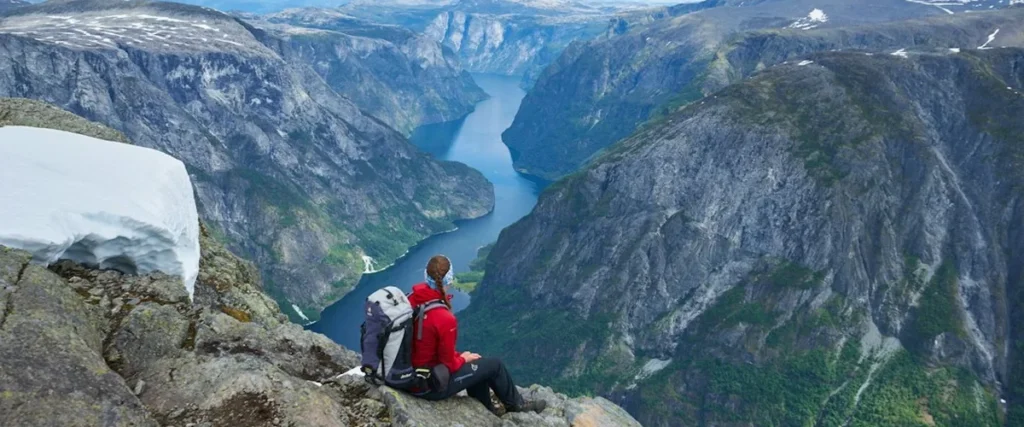
Abisko is the highlight for most people. Back in Kiruna, catch the train west for a ride of under two hours along lake Torneträsk. Abisko National Park is compact and walkable, sits about 195 km north of the Arctic Circle, and is often drier than the surrounding mountains, which is a real advantage when the weather turns elsewhere.
The canyon and the Nuolja chairlift
Start with the short walk along the Abisko River canyon, which begins near the tourist station and needs no planning. Then save your energy for the evening. The chairlift up Nuolja runs in summer, and from mid-June to mid-July it also runs late in the evening so you can be on the mountain at midnight. The ride takes about 20 minutes to the Aurora Sky Station at 900 meters, and from there it is about 2 km and 260 meters of climbing to the summit at 1,164 meters. Aurora Sky Station also runs a guided Midnight Sun Hike if you would rather not go up alone. Check the evening schedule before you go, since it does not run every night.
Lapporten, the U-shaped valley
You will see Lapporten from the train: two rounded peaks with a deep notch between them, the most photographed view in Swedish Lapland. Walking all the way into it is a big day, around 25 to 27 km round trip with no marked trail for part of the route. If that is too much, a two-hour walk out along the Kungsleden toward Njakajaure gives you a classic view of the valley without the commitment.
A taste of the Kungsleden
The Kungsleden, Sweden’s best-known long-distance trail, starts right at Abisko Turiststation. The full northern section to Nikkaluokta is 107 km and usually takes about five days, with huts along the way. The Swedish Tourist Association describes each stage. For a short trip, walk the first stage out and back as a day hike. If you have more time, our roundup of multi-day hikes puts it in context with other big trails.
Wild camping is allowed in most of the Swedish mountains under the right of public access, though national parks have their own rules. We cover where you can and cannot pitch a tent in our guide to the right to roam in the Nordics.
Day 7: Narvik, or straight home
The railway does not stop at the border. Past Abisko it climbs through Björkliden and Riksgränsen and then drops steeply down the Ofoten line to Narvik on a Norwegian fjord. Even if you only ride there and back, the descent from bare mountain plateau to sea level is one of the most dramatic short train journeys in the north. From Narvik you can pick up the night train south again, since it starts there.
If you would rather keep going, Narvik is also a gateway to the Lofoten Islands by bus, which turns this into a longer Nordic loop. Our Nordic road trip guide covers routes on that side of the border, for the parts where a car does make sense.
What to pack and what to expect
- Layers, not a winter coat. Summer days can be warm in the valleys and close to freezing on a summit in the same afternoon. A fleece, a waterproof shell and a warm hat cover most situations.
- Proper hiking boots. Trails are rocky and often wet. Trainers work for the canyon walk, not for Lapporten.
- Mosquito repellent and a head net for late June and July, especially near lakes and on still evenings.
- An eye mask. Hotel blackout curtains vary, and 24-hour daylight is hard on sleep.
- Food for long days. Shops are limited outside Kiruna. Buy trail food before you head out to Abisko or Nikkaluokta.
- Cash is rarely needed. Cards work almost everywhere, including mountain stations.
Seasonal buses, boats and chairlift evenings all run on short summer schedules that change from year to year, so confirm dates close to your trip rather than relying on last summer’s timetable.
How this compares with a winter trip
Many people only think of Lapland in the dark months. Winter brings the aurora, dog sledding and the full Icehotel, and we cover that version in our northern lights trip guide. Summer gives you something different: open trails, long days that let you fit two hikes into one date, and a much easier time getting around without a car, since all the summer buses and boats are running. It is also the one season when you can stay out until 2am without ever reaching for a flashlight.
Once you have the train times, the bus dates and your huts or hotels pinned down, put them all in one place. Lentii lets you build a day-by-day plan with each leg, booking and walk on its own day, then share it with whoever you are traveling with, so nobody is hunting through emails for the Nikkaluokta bus time at a trailhead with no signal.
FAQ
Can you visit Swedish Lapland in summer without a car?
Yes. The night train from Stockholm stops in Kiruna and Abisko, and seasonal buses reach places like Nikkaluokta and Jukkasjärvi. Most of the classic hikes start within walking distance of a station or bus stop.
When is the midnight sun in Abisko?
Roughly 25 May to 17 July, according to the Swedish Tourist Association. Kiruna’s period is a few days shorter at each end. Late June and early July give you the best mix of sun and open services.
How many days do you need?
Five days covers Kiruna and Abisko at a relaxed pace, not counting the night trains. Add two days if you want to walk in to Kebnekaise, and a full week or more for the northern Kungsleden.