

You check out at ten. Your train leaves at nine that night. In between sits a whole day in a city you came a long way to see, and a suitcase you cannot drag through a cathedral. This is the most predictable problem in European travel, and it has gotten much easier to solve in the last few years.
Here is how luggage storage in Europe actually works, what it costs, and the handful of rules that catch people out.
The three places that will take your bag
Almost every solution falls into one of three buckets: the train station, a shop that has signed up to a storage app, or your own hotel. They are not interchangeable. The station is reliable but rigid. The apps are flexible but depend on somebody being behind a counter. The hotel is free but only works on the day you arrive or leave.
Most travelers default to the station because it is the one they have heard of. That is often the wrong call, and it is usually the most expensive of the three.

Station left luggage: the default, with caveats
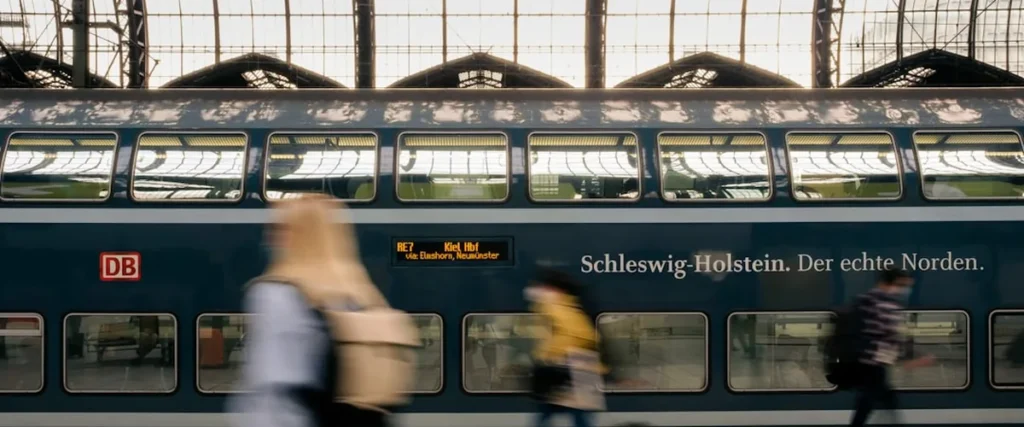
Big European stations run one of two systems. Either a wall of automated lockers you feed with a card, or a staffed counter where somebody takes your bag and hands you a ticket. Milano Centrale, Madrid Atocha and most large Spanish and Italian stations use the staffed model. German, Austrian and Swiss stations lean on lockers.
The staffed counters are the slow ones. At peak times in summer, the line at a major Italian station can run forty minutes in each direction, which means you are spending over an hour of your free day standing still. Factor that in before you decide it is the convenient option.
Lockers are faster but come in fixed sizes, and the large ones sell out first. If you turn up at four in the afternoon with a checked-bag-sized case, you may find only small lockers left. Some stations now let you reserve online, most do not.
Two things to check before you commit. First, closing time. A staffed counter that shuts at 9pm is useless if your night train leaves at 11. Second, whether the station has storage at all. Plenty of mid-size stations quietly removed their lockers years ago for security reasons and never put them back.
Storage apps: the shop around the corner
The change in the last few years is a network of small businesses that store bags as a side line. A newsstand, a hotel reception, a phone repair shop, a bar. You book a slot through a platform like Stasher or Radical Storage, walk in, and they tag your bag and put it in a back room.
The pricing model is what makes these worth knowing. You pay a flat rate per bag per day rather than per hour, and the rate does not change if your bag is enormous. Expect somewhere around five to seven euros a bag for a full day in most cities. The platforms include insurance cover in that price, which is more than a locker gives you.
The catch is human. The shop has opening hours, and if the owner decides to close early on a quiet Sunday, your bag is behind a shutter. Read the listed hours carefully and pick a location with a lot of reviews rather than the one closest to you. A spot two blocks further that has been doing this for three years beats a brand new one on your doorstep.
The upside is location. These places sit in the middle of neighborhoods, not out at the station, so you can drop your bag where you are actually going to spend the day.
Your hotel: free, and everybody forgets
Every hotel in Europe will hold your luggage on your checkout day. Most will hold it on your arrival day too, before the room is ready. Hostels do it. Guesthouses do it. Airbnb hosts usually will not, which is the one real gap.
This costs nothing and nobody asks for it often enough. If your flight is at eight in the evening and you checked out at eleven in the morning, leave the bags at the front desk, go spend the day, come back at six. The only reason not to is geography: if the hotel is forty minutes from where you want to be and nowhere near your departure point, you are buying yourself two dead journeys.
Ask at check-in rather than on the last morning, and ask whether the storage room is locked or just a corner of the lobby. It changes what you are willing to leave in there.
What it costs
| Option | Typical price | Best for | Watch out for |
|---|---|---|---|
| Station locker | Roughly €4-6 small, €7-12 large, per 24h | Short gaps between trains | Large sizes sell out; card-only machines |
| Staffed station counter | Often €6-8 for the first hours, then hourly | Oversized bags, bikes, skis | Queues in summer; early closing |
| Storage app (shop partner) | About €5-7 per bag per day, flat | Full free days in the center | Shop hours; early Sunday closing |
| Hotel front desk | Free | Arrival and checkout days | Unlocked rooms; a long walk back |
| Airport lockers | Usually the priciest per day | Long layovers with a city trip | Not every terminal has them |
Prices move and vary by city, so treat these as the shape of the market rather than a quote. The useful takeaway is that two people with two bags are usually better off with a storage app than with two lockers, and a family of four should think hard before paying per bag at all.
The rules that catch people out
Size limits are real and they are enforced. Storage app listings show a bag size cap, and a hard-shell case that is over it can be refused at the door. Anything unusual, a bike box, a surfboard, a cello, needs a staffed counter and a phone call ahead.
Some stations screen your bag. Italian stations in particular run luggage through an X-ray before accepting it. It is quick, but it means the counter is the only option there and the line is longer than it looks.
Closing time is the one that actually ruins days. Lockers usually run on the station’s own opening hours, which can mean a 1am shutdown even if trains are still running. If you are catching a night train, confirm the retrieval window before you hand anything over.
Buses are not trains. Coach stations rarely have storage, and the bus itself will not hold your bag between journeys. FlixBus publishes its baggage rules, and they cover travel, not storage. If you are moving around Europe by coach, storage is something you arrange separately every time.
Take your valuables with you. Passport, laptop, medication, chargers. Not because storage is unsafe, but because the one time the shop closes early or the locker jams, you want the problem to be inconvenient rather than serious.
The same habit helps on any city day. Our guide to pickpockets and tourist scams in Europe covers where theft actually happens and how to split cards and cash so one lost bag doesn’t end the trip.
Cities where this is easy, and where it is not
Easy: Rome, Barcelona, Amsterdam, Berlin, Lisbon, Prague. Dense city centers, heavy tourist traffic, and storage points every few blocks. Amsterdam alone has options at Centraal, around Leidseplein, and near the museums.
Harder: smaller cities and anywhere the tourist center is spread out. In much of Scandinavia and the Baltics you will find lockers at the main station and very little else, so the station becomes the plan by default rather than by choice. Same in a lot of French regional towns.
Worth knowing: in cities where you are moving between neighborhoods anyway, storing near your evening departure point beats storing near your morning checkout. Drop the bag where the day ends, not where it started.
Building the bag drop into the day
The mistake is treating storage as an errand you handle on the morning. It is a fixed point in the day’s route, same as a timed museum ticket, and the day works better if you plan around it.
Two questions settle it. Where does the day end, and what time do you need the bag back in your hands? Store near the end point, set an alarm an hour before closing, and you will not spend the afternoon watching the clock.
On a multi-city trip this compounds. Every travel day has a checkout, a gap, and a departure, and if you have four of them in two weeks you are making the same decision four times. Working it out once, in advance, saves a real amount of standing around. If you are still shaping the route, our guide to planning a multi-city Europe trip without backtracking covers how to sequence the cities so those gaps land somewhere useful.
This is the kind of detail that is easy to hold in your head for one city and impossible for five. Build the route in Lentii and you can pin the storage stop into the day like any other item, share it with whoever you are traveling with, and stop re-explaining the plan at every station.
FAQ
Can I leave my luggage at a European train station overnight?
Usually yes, but check the closing time rather than assuming. Lockers are typically sold in 24-hour blocks and stay locked overnight, while staffed counters often shut in the evening and reopen in the morning, which means your bag is unreachable until then. If you need the bag late at night, a locker is the safer bet.
Is luggage storage in Europe safe?
Station lockers and app-partnered shops both have good records, and the storage platforms include insurance cover per bag as standard. The practical risk is not theft but access: a shop closing early, or a counter with a longer line than you planned for. Keep your documents, electronics and medication on you and the rest is a manageable problem.
How much does luggage storage cost in Europe?
Expect roughly five to seven euros per bag per day through a storage app, and somewhere in the four to twelve euro range for a station locker depending on size and city. Hotels hold bags for free on arrival and checkout days, which makes them the cheapest option whenever the location works.