
Every European trip reaches the same moment. You have the flights, you have somewhere to sleep, and then a box appears asking whether you want to add travel insurance for another 40 euros. Most people either click yes without reading anything or click no and hope for the best.
Both are guesses. The useful answer depends on one card you may already own, and on a short list of things that card was never built to pay for.
What the EHIC and GHIC actually are
The European Health Insurance Card is not insurance. It is proof that you are entitled to state healthcare in another EU or EEA country on the same terms as someone who lives there. If a local resident would be treated for free, you are treated for free. If a local resident pays a 25 euro contribution to see a doctor, so do you.
That last part catches people out. In Denmark or Spain, a visit to a public clinic costs you nothing. In France, you generally pay the doctor and claim most of it back afterward. In Belgium and Ireland there are standard patient fees. The card gets you the local deal, whatever the local deal happens to be. The official rules are set out on the European Commission’s Your Europe page on unplanned healthcare.
UK residents hold the Global Health Insurance Card instead, which works in EU countries on broadly the same basis. Both cards are free. If anyone charges you for one, you are on the wrong website.

What the card covers
It covers medically necessary treatment that cannot wait until you get home. A broken wrist. A chest infection. An asthma attack. Dialysis or oxygen therapy you need on an ongoing basis, provided you arrange it with the local provider before you travel.
It also covers pregnancy care and treatment of chronic conditions that flare up while you are away. The test is not whether the problem started abroad. The test is whether it needs treating before your return date.
What it does not do is turn you into a private patient. You get the public system, with the public system’s waiting rooms.
The gaps that cost real money
Here is where the card stops, and where an actual policy starts earning its price.
Getting you home. Repatriation is the big one. If you break a hip in Portugal and cannot sit in an economy seat, someone has to pay for a medical flight or a stretcher berth. That bill runs into the thousands and the card covers none of it. Neither does it cover bringing a body home, which is the single most common reason families discover the gap at the worst possible time.
Private clinics. In tourist areas, the clinic nearest your hotel is often private. An ambulance will usually take you to a public hospital, but a taxi will take you wherever you point it. Pay attention to which one you have walked into, because the card is worthless at the private one.
Anything before you leave. Cancellation is not healthcare. If your father is taken ill in March and you abandon an April trip, no health card refunds your flights.
Your belongings. Stolen phones, lost bags, a camera that goes into a canal. Health cover has nothing to say about any of it.
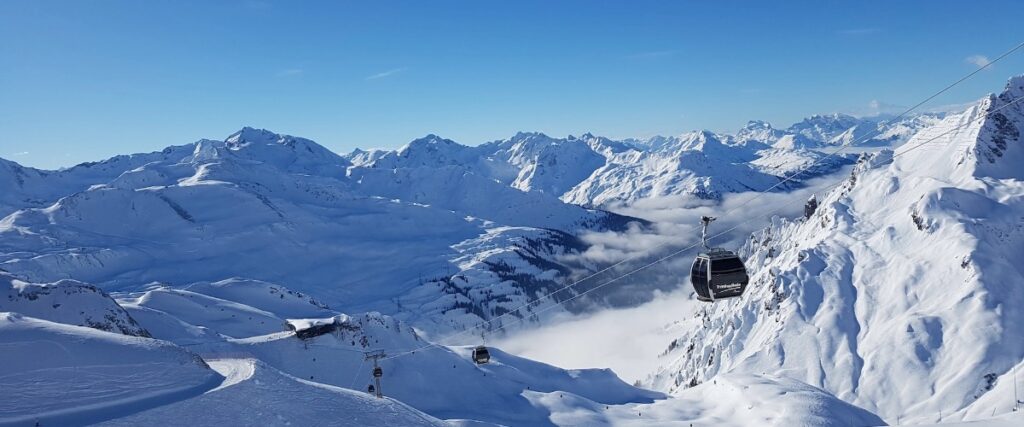
Rescue off the road network. Mountain rescue and helicopter evacuation are billed separately in several Alpine countries, and search costs in the mountains are often excluded even from decent policies unless you buy the winter sports or hiking extension. If you are heading for the ski resorts in the Alps, read that section of the policy twice.
Anywhere outside the scheme. The card works across the EU and EEA plus Switzerland. Turkey, Albania, Serbia, Montenegro, Bosnia, Morocco and the UK for most EU citizens sit outside it or run on separate bilateral arrangements. A Balkans road trip crosses that line without any signage.
Card versus policy, side by side
| Situation | EHIC / GHIC | Travel policy |
|---|---|---|
| Public hospital treatment | Yes, on local terms | Yes, usually with an excess |
| Private clinic | No | Usually yes |
| Medical flight home | No | Yes, if repatriation is listed |
| Trip cancellation | No | Yes, on listed reasons only |
| Stolen luggage | No | Yes, capped per item |
| Skiing and mountain rescue | No | Only with the winter sports add-on |
| Non-EU countries | No | Depends on the region you selected |
When the card on its own is genuinely enough
There is a real case for traveling on the card alone, and it looks like this. You are going to one or two EU cities. You are healthy, under about 60, and not doing anything more strenuous than climbing a cathedral tower. Your flights were cheap enough that losing them would annoy you rather than hurt you. You are carrying an old phone and no expensive gear.
A weekend in Lisbon under those conditions does not need a policy. The worst realistic outcome is a public clinic visit and a small local fee. Buying cover for that is buying peace of mind, which is a legitimate thing to buy, but be honest that this is what you are doing.
When you should stop reading and buy the policy
The calculation flips fast. Buy cover if any of these apply.
- The trip cost enough that losing it would actually hurt. Anything with prepaid apartments, internal flights or a tour deposit.
- You are going anywhere outside the EU and EEA, including a day trip across a border you had not thought about.
- Winter sports, diving, climbing, or riding a scooter. Scooter injuries in the Greek islands are a genre of their own, and many policies exclude them if you were riding without the right license category.
- You are traveling with children or with anyone over 70.
- You have a condition that could need attention, in which case declare it. An undeclared condition is the most reliable way to have a claim refused.
- You are carrying a laptop, camera or bike worth more than you would want to replace out of pocket.
Annual multi-trip cover is worth pricing if you take more than two trips a year. Around the third trip it usually costs less than buying single-trip cover each time.
Reading a policy without reading all of it
Nobody reads forty pages. Read these five things instead.
The medical limit and the repatriation limit. They are separate numbers. A policy can advertise a large medical ceiling and cap repatriation much lower.
The excess. What you pay before the insurer pays anything, and whether it applies once per claim or once per person per claim. Two travelers, two excesses.
Single item limit on belongings. The headline baggage figure is meaningless if the per-item cap is 250 euros and your camera cost four times that.
The activity list. Look for what you are actually planning to do. Cycling, hiking above a stated altitude, and anything with a motor tend to sit in their own category.
The cancellation reasons. Cancellation is never open-ended. It pays out on a defined list, and “changed our minds” is not on it. Neither, in most policies, is a strike you knew about when you booked.
The UK government keeps a plain-language summary of what to check on its foreign travel insurance guidance, and it applies well beyond UK travelers.
Where the surprises actually happen
Ambulance charges are the quiet one. Several countries bill for the ride even when the treatment at the other end is free, and the card does not always cover it.
Dental care is another. Emergency dental treatment abroad is usually paid privately almost everywhere, and standard policies cover only pain relief rather than the actual repair.
Then there is prescription medication. You are entitled to it at local prices, which in Scandinavia can be higher than you are used to. If you take something regularly, bring enough for the trip plus a few days, and keep it in the original packaging with the pharmacy label. Border officers do occasionally ask, and the label answers the question faster than a conversation does. This is the sort of thing worth adding to a standing pre-trip routine rather than remembering fresh each time.
A ten-minute setup before you go
- Apply for or renew the card through your own national health authority. It is free and takes a few minutes, though delivery can take a couple of weeks, so do it when you book rather than the week you leave.
- Photograph the card and the policy document. Store the images somewhere you can reach without your bag.
- Write down the insurer’s 24-hour emergency number separately from the policy PDF. You will want it at a moment when opening a PDF is difficult.
- Check whether your bank card or employer already includes cover. Plenty of premium accounts do, with age limits and trip-length caps buried in the terms.
- Tell one person at home which insurer you are with.
None of this takes longer than the average airport queue, and it removes the two questions that are genuinely hard to answer while something is going wrong: who do I call, and what am I covered for.
Your phone belongs on the same list. Sorting out data in Europe before you fly takes about five minutes at home and saves you the same queue in the arrivals hall.
Check the passport while you have it out. If you do not hold an EU passport, the Schengen 90/180 rule and ETIAS decide how long you can stay and what you need at the border, and neither is something an insurer can fix for you.
Keep it with the rest of the plan
Insurance details belong next to your booking references rather than in a separate folder nobody can find. If you are building the trip in the order that saves money on flights and trains, add the policy number and the emergency line to the same itinerary while you are there. Lentii lets you build the whole route, drop notes onto individual days, and share it with whoever is coming along, so the person sitting next to you in the clinic waiting room can find the number too.
Costs vary widely by country, and if you want a sense of what a week actually runs before you decide how much cover to buy, the breakdown of what a week in the Nordics costs is a reasonable place to calibrate. Traveling with some awareness of local systems, medical ones included, is part of traveling responsibly rather than just cheaply.
FAQ
Is the EHIC enough for a trip to Spain or Italy?
For public healthcare, yes. It gets you treated on the same terms as a resident, which in both countries means most emergency treatment costs you little or nothing. It will not cover a private clinic, a flight home on a stretcher, or your cancelled flights, so whether it is enough depends on how much the trip cost you upfront.
Do I need travel insurance if I already have the card?
Not always. For a short city break in the EU with cheap flights and no expensive gear, the card covers the realistic risks. For anything with a large prepaid cost, winter sports, a non-EU stop, or travelers who are very young or older, the card leaves the expensive gaps open and a policy closes them.
Does the card work in Switzerland, Norway and the UK?
Switzerland, Norway, Iceland and Liechtenstein are inside the scheme. The UK runs separate arrangements depending on your nationality and residence, so check your own national health authority’s page rather than assuming either way. Countries outside the EU and EEA, including much of the Western Balkans and Turkey, are not covered at all.