
Every European trip eventually gets a wet day. It is the one variable you cannot book around, and it is the one most itineraries have no answer for, which is why a single grey morning can knock a whole week off course.
The fix is not a raincoat. It is having one indoor plan per city already picked before you leave, so a bad forecast means swapping days rather than standing in a doorway deciding what to do.
The habit: one indoor anchor per city
When you plan a trip, most people fill the days with the outdoor things: the viewpoint, the park, the walking route, the market street. Those are the reasons you went. They are also the first things rain takes away.
So for every city on your route, pick one thing that works regardless of weather and deliberately leave it unscheduled. A big museum, a bathhouse, a covered market, a neighborhood you can cross mostly under arcades. You are not planning to do it. You are keeping it in reserve, so that when the forecast turns you have somewhere to put the day instead of losing it.
This matters more than it sounds on trips built around free outdoor plans. A day of parks, viewpoints and street markets costs nothing and collapses entirely in heavy rain, which is worth remembering alongside our list of free things to do in Europe.

Read the forecast, but do not over-read it
Three days out, a European forecast is reliable enough to reshuffle your itinerary. Ten days out it is barely a hint, and rearranging a trip around it usually wastes more than it saves.
Look at two numbers rather than the icon. Rainfall in millimeters tells you whether it is a drizzle you can walk through or a day that genuinely ends outdoor plans. Hourly breakdown tells you whether it is a morning band that clears by two, which is common on Atlantic coasts, or steady all day. A single cloud-with-drops symbol flattens both of those into nothing useful.
National weather services tend to beat the aggregator apps on local detail. The Met Office for Britain and Ireland and yr.no for the Nordics and much of northern Europe are both free and considerably more precise about timing than the default app on your phone.
The Met Office switched to a new forecasting model in January 2026, its largest upgrade in over three years, and the parts that improved most are cloud and fog. Those are exactly the two things a city itinerary cares about and the two things the old models were worst at, so a fog-or-not call on a Scottish morning is now worth more than it was. Its global forecasts also run to ten days, though the warning above about the back half of a ten-day forecast has not changed.
What actually fills a wet day
Some indoor options carry a full day. Most carry two hours. Knowing which is which is the difference between a rescued day and four museums you did not want to see.
Museum clusters, not single museums. One museum fills a morning. A cluster you can walk between without going outside for long fills a day. Berlin’s Museum Island, Vienna’s MuseumsQuartier, Madrid’s three big galleries within a few hundred meters of each other, and Amsterdam’s Museumplein all work this way.
Thermal baths and spas. The best wet-weather answer in Europe, and badly underused. Budapest’s bath houses, Iceland’s geothermal pools, Baden-Baden, and the public swimming halls in most Nordic and German cities will absorb an entire afternoon and leave you in a better mood than you started.
One correction if you are heading to Budapest on an older guide: the Gellért has been closed since 1 October 2025 for a renovation, and the bath’s own site now points visitors to the Széchenyi instead. Reopening is pencilled in for 2028, and the funding for the work is still unsettled, so treat that date as a hope rather than a plan. The Széchenyi absorbs a wet day just as well. A 2026 day ticket with a locker runs 13,200 forint Monday to Thursday and 14,800 on Fridays and weekends, and if you can face an early start, entry before 9am is 10,500 forint and the place is close to empty.
Covered markets and halls. Barcelona’s Boqueria, Lisbon’s Time Out Market, Florence’s Mercato Centrale, Copenhagen’s Torvehallerne, Budapest’s Great Market Hall. Food, browsing, and somewhere to sit, all under a roof. Two or three hours each.
Church and palace interiors. The interiors you skipped because the weather was good are exactly right now. Cathedrals, chapels, palace apartments and the smaller house museums are quiet, warm, and mostly cheap or free.
Arcades and department stores. Nineteenth-century shopping arcades exist across central Europe precisely because of the climate. Milan’s Galleria, the passages of Paris and Brussels, Naples’ Galleria Umberto. Vienna and Prague have whole stretches of center you can cross under cover.
Transport as sightseeing. A tram route across a city, a ferry across a harbor, a funicular. You see the place from a dry seat, and it costs the price of a ticket. Lisbon’s trams, Istanbul’s ferries, Zurich’s lake boats and Copenhagen’s harbor buses all qualify.
Something with your hands. A cooking class, a food tour that moves between indoor stops, a workshop. These take three or four hours, they are indoors by design, and they tend to become the thing people remember from the trip.
With young children, pick one of these and stop there. A six-year-old has about one museum in them before the floor arrives, and that limit shapes every day of the trip, not just the wet ones. Our guide to traveling Europe with kids works through how much fits in a day.
Wet-weather anchors, city by city
A starting point for the cities that come up most often on European routes.
| City | Indoor anchor | Fills roughly |
|---|---|---|
| Budapest | Széchenyi baths, then the Great Market Hall | A full day |
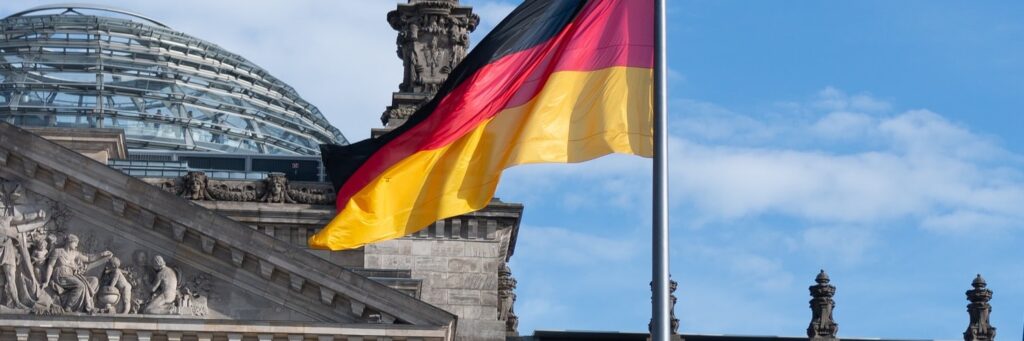
| Berlin | Museum Island, four museums on one ticket | A full day |
| Vienna | MuseumsQuartier and the coffee houses around it | A full day |
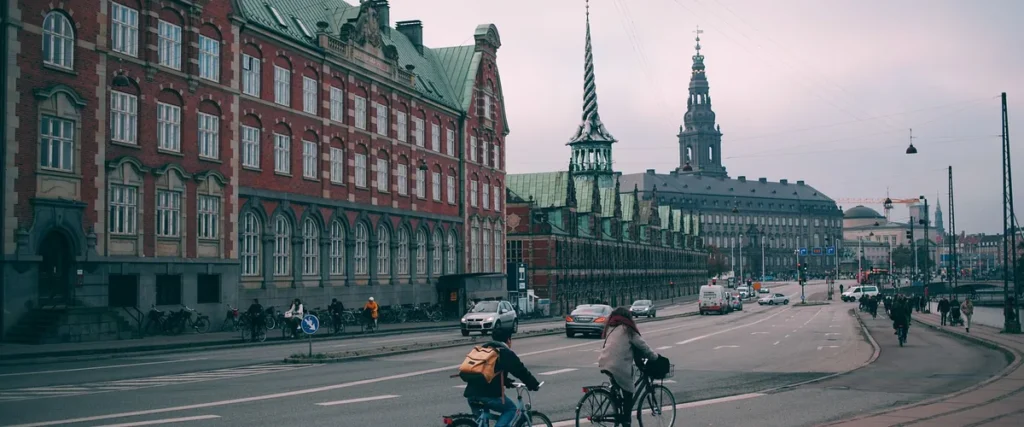
| Copenhagen | Design and art museums, Torvehallerne, a swim hall | A full day |
| Lisbon | Gulbenkian museum, tram 28, Time Out Market | A full day |
| Rome | Vatican Museums, or a run of major churches | A full day |
| Barcelona | Boqueria, Sagrada Família interior, MNAC | Half a day each |
| Amsterdam | Museumplein, three major museums side by side | A full day |
| Porto | Port cellars across the river, Bolhão market | Half a day |
| Edinburgh | National museums, free and large | A full day |
Berlin needs a footnote. Museum Island still fills a wet day, but the Pergamonmuseum is not part of it and will not be for a while: it is closed through 2026, and the museum has put the reopening of the north wing, the Pergamon Altar hall and the Museum für Islamische Kunst at 4 June 2027. The south wing stays shut considerably longer. Four museums is still four museums, but if the altar was the reason you were going, move it to another trip.
If Copenhagen is on your route, the wet-day version of it is genuinely good, and we sketched how the days fit together in our Copenhagen 3-day itinerary.
The places rain hits hardest
Some destinations have a deep indoor bench. Others have almost none, and those are the ones to check the forecast for before you commit.
Small islands are the clearest case. On most Greek and Croatian islands the entire offer is outdoors: beaches, harbors, coastal walks. A wet day there is a day in a taverna, which is pleasant once and grim twice. Alpine and fjord hiking bases have the same problem in reverse, where low cloud removes the view you traveled for and there is little else in town.
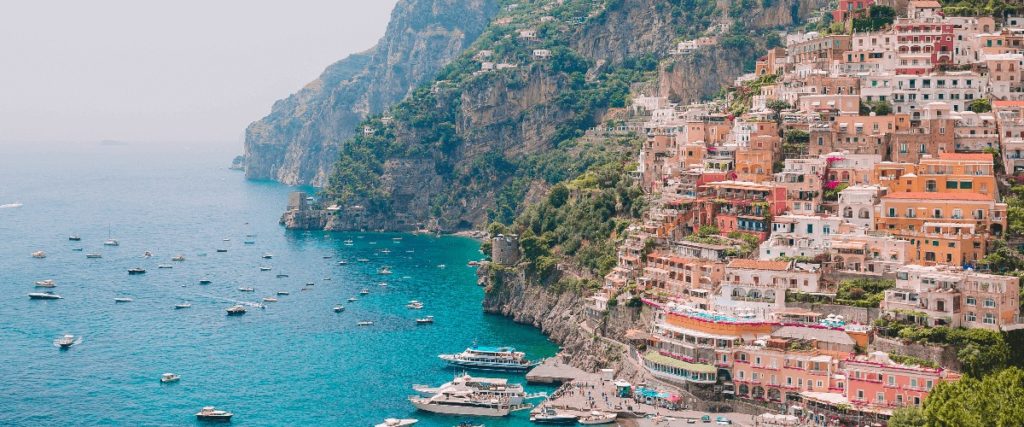
Coastal Italy in the shoulder months, the Amalfi coast in particular, is another. The towns are steep, the appeal is the view, and the museums are small. Northern Europe is the opposite. Copenhagen, Amsterdam, Berlin and Vienna were all built by people who expected rain, and it shows in how much of each city is usable indoors.
This is worth weighing when you choose your months, since shoulder season buys you cheaper rooms and thinner crowds at the cost of less reliable weather. We went through that trade in our guide to shoulder season in Europe.
Everyone else has the same idea
The thing nobody warns you about: rain pushes an entire city’s visitors indoors at once. The museum that had walk-up tickets yesterday has a queue around the block, and the timed slots for the big attraction sell out by mid-morning.
Two practical consequences. First, book the indoor anchor the evening before if the forecast is already clear, not at nine the next morning. Most major museums release timed entry online and it costs nothing to hold a slot. The exception is the handful of places that release tickets on a fixed schedule rather than continuously. The Anne Frank House puts its tickets out on Tuesdays at 10:00, six weeks ahead, which means the evening-before trick cannot work there at all and a rainy Amsterdam day needs a different anchor. Second, pick the second-tier option on the wettest days. The smaller museum, the less famous bath house, the neighborhood market rather than the central one. They absorb the same afternoon with a fraction of the crowd, and on a grey day the difference between a great collection and a very good one matters less than whether you can move around it.
Restaurants shift too. Places that live off terrace seating lose most of their capacity in rain, so lunch without a booking gets harder around one o’clock. Eating early or late sidesteps it entirely.
Rebuild the day, do not cancel it
When the wet day arrives, the move is to swap rather than scrap.
Find the outdoor thing scheduled for a dry day later in the week and trade it with today’s indoor reserve. You lose nothing except the order. This only works if the outdoor plan is not tied to a fixed booking, which is a decent argument for booking your flexible activities loosely and your timed-entry tickets on the days you have the least choice about.
Two smaller habits help. Start later, because European rain often clears by early afternoon and an 11am start can save the second half of a day. And keep the walking short between indoor stops, since the thing that ruins a wet day is not the rain itself but forty minutes of getting soaked between two places you wanted to be.
On gear: one properly waterproof jacket and shoes you do not mind getting wet. An umbrella is close to useless in coastal wind, and every city sells cheap ones badly the moment it starts raining.
Building the reserve into your plan
All of this only works if the indoor options are written down somewhere before you go. A wet morning is the worst possible time to research a city from scratch on a phone with 30% battery.
Keep it simple: one or two indoor anchors per city, sitting in the plan but unscheduled, ready to be pulled forward. Lentii is built for exactly this kind of shuffle. Lay out the days, keep a few alternatives parked alongside them, and move things between days when the forecast changes, with everyone on the trip seeing the same updated plan.
If you are still shaping the route itself, our 7-day Europe itinerary routes are a reasonable place to start, and they leave room for exactly this kind of swap.
FAQ
What are the best rainy day things to do in a European city?
Thermal baths, a cluster of museums you can walk between, a covered market, and church or palace interiors. Baths and museum clusters carry a full day. Markets and single museums cover two or three hours, so plan to combine them.
Which European cities handle rain best?
The northern ones, because they were designed for it. Copenhagen, Amsterdam, Berlin, Vienna and Budapest all have enough indoor options to fill several wet days. Small islands and mountain hiking bases have the least to fall back on.
Should I change my itinerary based on the forecast?
Inside three days, yes. Swap a wet day with a dry one later in the week rather than cancelling anything. Beyond about a week out, forecasts are too vague to plan around and reshuffling usually costs more than it saves.