
Planning a step-free trip in Europe is not harder than planning any other trip. It is just less forgiving. The improvisation that saves an ordinary itinerary, hopping on the next bus or walking the last kilometer, is exactly what stops working, so the planning has to carry more weight up front.
This is the practical layer: which systems actually work, what to book ahead, and where the word “accessible” is doing less work than it appears to.
Step-free is a property of the route, not the city
Cities get described as accessible or not, and the label is close to meaningless. What matters is whether your specific chain of movements works end to end: hotel door, to the stop, onto the vehicle, off at the other end, into the building.
One broken link breaks the whole chain. A metro line with lifts at every station is no help if your station is the one where the lift has been out since spring. A museum with a ramp at the side entrance still needs you to reach that side entrance across a square of setts.
So plan routes, not destinations. Pick the three or four journeys you will make most often, confirm each one properly, and let the rest of the itinerary arrange itself around those. This is slower than normal trip planning by maybe an hour, and it is the hour that decides whether the trip works.

Metro systems, roughly sorted
Age is the best predictor. Systems built or rebuilt in the last forty years tend to be step-free by design. Victorian and early twentieth-century networks were not, and retrofitting a lift into a deep tunnel under a medieval street is expensive and slow.
| Roughly | Cities | What to expect |
|---|---|---|
| Step-free by design | Copenhagen, Vienna, Bilbao, Helsinki | Lifts standard, level boarding, few surprises |
| Mostly workable | Berlin, Madrid, Barcelona, Munich, Stockholm | Wide lift coverage, check the specific stations |
| Partial, plan around it | London, Prague, Milan, Amsterdam | Step-free on some lines and stations only |
| Assume it will not work | Paris, Rome, Lisbon, Naples | Very limited lifts; buses and taxis are the plan |
Two things save this from being discouraging. Buses are often the better answer anyway: most European city fleets are low-floor with ramps now, they run at street level with no lift to fail, and they go where the metro does not. And the operators publish real-time lift status, which is the number that actually matters on the day. Transport for London’s accessibility pages are a good example, and Copenhagen’s metro is straightforward enough that it barely needs checking. City tourism boards publish useful guides of their own, and visitBerlin’s accessible Berlin pages are among the more detailed.
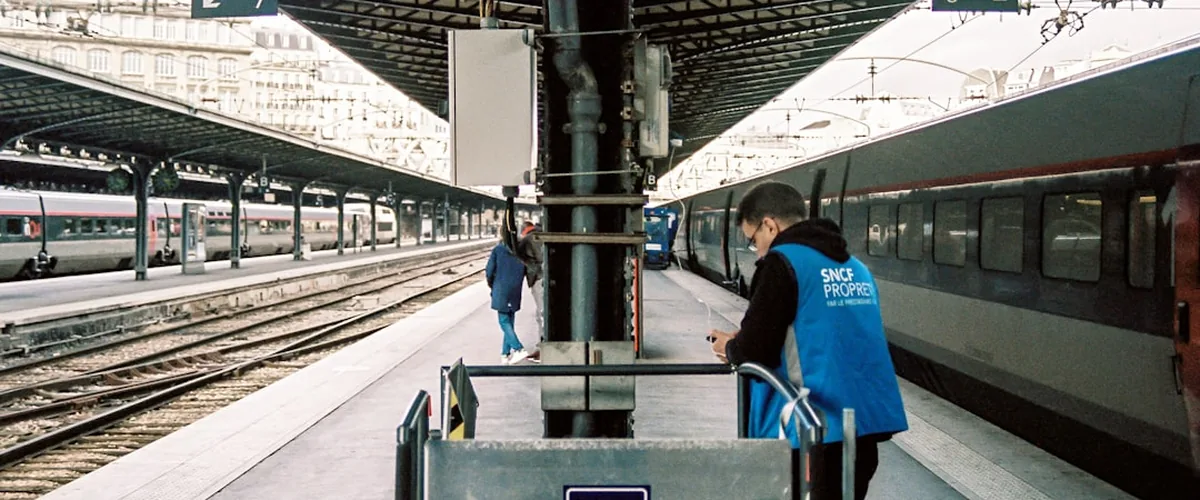
Paris deserves the blunt version. The Métro is largely inaccessible outside the newest line, and no amount of planning changes that. People do have good trips there, using buses, accessible taxis and the newer tram lines. They just do not use the Métro to do it.
The cobblestone problem is bigger than people expect
Historic centers are paved in setts and cobbles, and that surface is genuinely difficult with wheels, with a stick, or with any joint that objects to vibration. Lisbon’s polished limestone is slippery in rain. Prague, Dubrovnik, Tallinn and large parts of Rome are rough and uneven in a way photos never show.
Workarounds that help: larger front wheels handle setts far better than small ones, so if you have a choice of chair for the trip, take the one with bigger castors. Ask about the smooth route rather than the short one, because most old cities have a modernized street or two through the middle and locals know which. And budget more time and fewer stops per day than a guidebook suggests.
It also pays to have indoor plans ready for days when the surface is wet and the answer is no. Our list of rainy day plans in European cities works just as well as a bad-surface backup.
Trains: book the assistance, and book it early
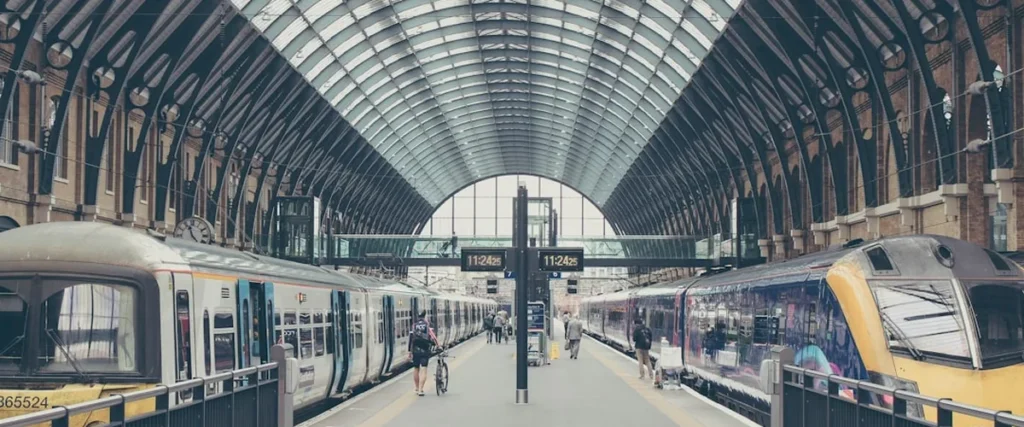
Rail is the strongest part of accessible travel in Europe, and it is the part that most rewards planning ahead.
Passengers with reduced mobility have a right to assistance on rail journeys across the EU, and operators are obliged to provide it free. The practical catch is notice. The current rules generally require you to request assistance at least 24 hours ahead, and some operators want longer for international journeys. Turn up without booking it and staff will usually try to help, but there is no guarantee a ramp and a person will be free when your train is.
Book the wheelchair space at the same time as the ticket rather than after. There are only a handful per train, they are sold separately from ordinary seats on most operators, and on busy routes they go first. Deutsche Bahn runs one of the more reliable assistance services and is a reasonable model for what to expect elsewhere. For the rules themselves, the EU’s own page on transport rights for passengers with disabilities is the authoritative version and worth reading once.
Connections need more room than the timetable gives them. A 12-minute change is fine for a walking passenger and tight for one who needs a ramp at both ends, because assistance staff have to reach you. An hour is comfortable. If you are weighing rail against flying for a longer leg, our comparison of train versus plane door to door holds up well here, and the door-to-door framing matters more when airport transfers are the hard part.
Night trains are worth a specific warning. Accessible compartments exist on many routes but are scarce, and sleeper berths often involve a ladder and a narrow corridor. Check the exact rolling stock for your date rather than the route in general.
Flying, buses and the gaps between them
Air travel has the clearest rules of any mode in Europe. Assistance at the airport is a legal right, it is free, and airlines cannot refuse a booking on the grounds of disability except in narrow safety cases. Request assistance when you book, and again at least 48 hours before departure.
Mobility equipment travels free and does not count against baggage allowance. It is also handled by baggage systems, and damage to chairs is common enough to plan for. Photograph the chair before check-in, remove or secure loose parts, label it clearly, and take a note of the manufacturer and model in case a repair is needed at the other end. Ask at the gate whether it can be brought to the aircraft door rather than checked at the desk, which most airlines allow.
Long-distance buses are the weakest link. Coach travel across Europe is cheap and extensive, and accessibility varies enormously by operator and vehicle. Some have lifts, many do not, and the booking systems are often unclear about which vehicle runs a given service. If the coach is central to your plan, call rather than book online. Our guide to when the bus beats the train is worth reading with this caveat attached.
“Accessible” is not a regulated word in accommodation
Hotel and rental listings use the term loosely, and there is no common European standard behind the filter. A property can tick the accessible box because it has a lift, while the lift is too small for a chair and there are two steps at the entrance.
Ask specific questions in writing before booking. The ones that catch most problems:
- How wide is the bathroom door, in centimeters?
- Is there a step or lip at the building entrance and at the room door?
- Is the shower level with the floor, or is there a tray to step over?
- What are the internal dimensions of the lift?
- Is there a grab rail by the toilet, and on which side?
Photos of the bathroom taken on a phone are worth more than any description, and most hotels will send them if asked. Getting a written answer also matters if something turns out to be wrong on arrival, since it gives you a basis to ask for a different room or a refund.
One more piece of paperwork: check your cover before you go. Pre-existing conditions and mobility equipment both need declaring, and standard policies frequently exclude the chair. Our piece on travel insurance and what the EHIC covers explains where the state scheme ends and private cover has to start.
Build the itinerary at a pace that survives contact with the day
The most common planning mistake is density. An itinerary with four stops a day assumes transitions are cheap, and for a step-free trip they are the expensive part. Two anchors a day, with a real break between them, produces a better trip than four rushed ones.
A few habits that help:
- Put the harder thing in the morning, when energy and lift availability are both better.
- Keep a base near a station you have personally confirmed is step-free, then let everything radiate out from it.
- Have a fallback for each anchor, so a broken lift costs you a change of plan rather than the afternoon.
- Check opening hours for the accessible entrance specifically. It is sometimes staffed for shorter hours than the main door.
Copenhagen is the easiest starting point in Europe for a first step-free city break, with a fully accessible metro, flat ground and wide pavements, and our three-day Copenhagen itinerary adapts to a slower pace without losing much.
Keeping the confirmed details in one place matters more here than on an ordinary trip, because the information is scattered across operators, hotels and booking references. You can build the whole itinerary in Lentii, drop the assistance booking numbers and the confirmed step-free routes onto the relevant stops, and share it with whoever you are traveling with so nobody is reconstructing it at a platform. The AccessibleEU centre is a useful reference to check alongside it.
FAQ
Which European city is easiest for wheelchair users?
Copenhagen, Vienna and Helsinki are consistently the least difficult: modern step-free metros, flat terrain and broad pavements. Barcelona and Berlin are good too, with more checking required station by station. Rome, Paris and Lisbon take the most planning, mainly because of hills, cobbles and limited lifts.
How far in advance do I need to book assistance?
At least 24 hours for trains under EU rules, and 48 hours for flights. Some international rail operators want more, so treat 48 hours as the safe default for everything and book the assistance at the same moment you book the ticket.
Does my wheelchair count as baggage on a flight?
No. Mobility equipment is carried free and does not count toward your baggage allowance anywhere in the EU. It is still handled as hold baggage, so photograph it before check-in and ask whether you can keep it as far as the aircraft door.