
Kraków is the city people point to when they say Europe can still be done on a small budget, and for once the reputation holds up. The old town is compact enough to walk, the trams are cheap, and a filling lunch in a milk bar costs less than a coffee in Copenhagen.
This is a three-day plan for Kraków on a budget, with what each day really costs, where the money goes, and the two big day trips that need booking well before you arrive.
Before you go: money, tickets and timing
Poland uses the złoty (PLN), not the euro. Cards and contactless payments work almost everywhere, including small cafés, so you need very little cash. When a card terminal or ATM offers to charge you in your home currency, say no and pay in złoty. That conversion offer is where budget travelers quietly lose money, and our guide to cards, cash and fees in Europe explains why.
The two most popular day trips, the Auschwitz-Birkenau Memorial and the Wieliczka Salt Mine, both work on timed entry. Book them as soon as your dates are fixed. In summer, the good time slots go weeks ahead.
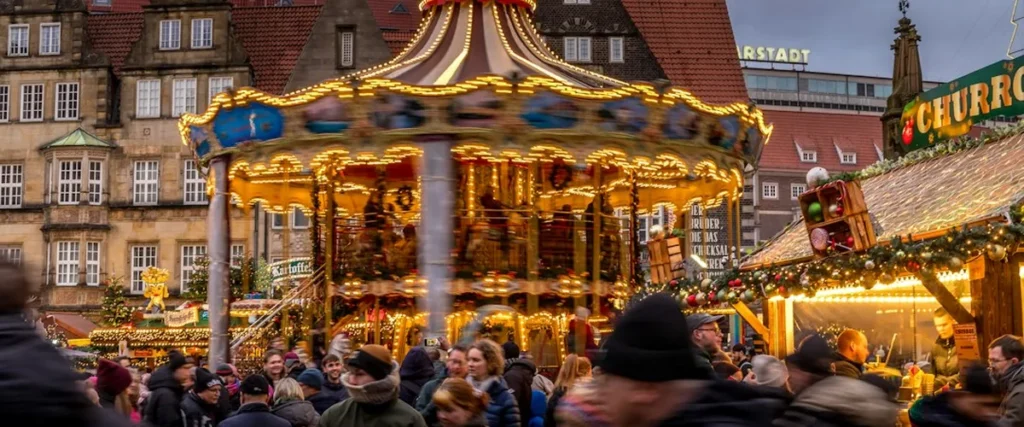
The best months for a budget trip are April to June and September to October. July and August are busy and hotter, and accommodation prices rise. Winter is cheapest, with Christmas markets in the main square, but the days are short and cold.

Getting around for very little
Most of what you want to see in Kraków sits within walking distance of the main square, so you may only use the tram a few times a day. When you do, the city’s public transport authority, ZTP, sells time-based tickets that cover trams and buses. Prices below are the official full fares for all zones.
| Ticket | Price (PLN) | When it makes sense |
|---|---|---|
| 30-minute / single trip | 6 | One short ride, for example old town to Kazimierz |
| 60-minute | 8 | A ride with a change, or out to Nowa Huta |
| 24-hour (all zones) | 25 | Days with four or more rides |
| 72-hour (all zones) | 55 | Staying outside the center and riding in daily |
| 7-day (all zones) | 80 | Longer stays or a base in the suburbs |
Validate your ticket when you board unless you bought it on a validated device. Inspectors do check, and the fine costs far more than a week of rides. Full details are in ZTP’s ticket guide.
If you stay in or near the old town, skip the 72-hour pass. You will walk most of the time, and two or three single tickets a day usually work out cheaper. Our piece on when a city transport pass pays off walks through the math.
From the airport, a regional train runs to Kraków Główny, the main station next to the old town. It takes about 20 minutes and costs a fraction of a taxi.
Day 1: Old Town and Wawel
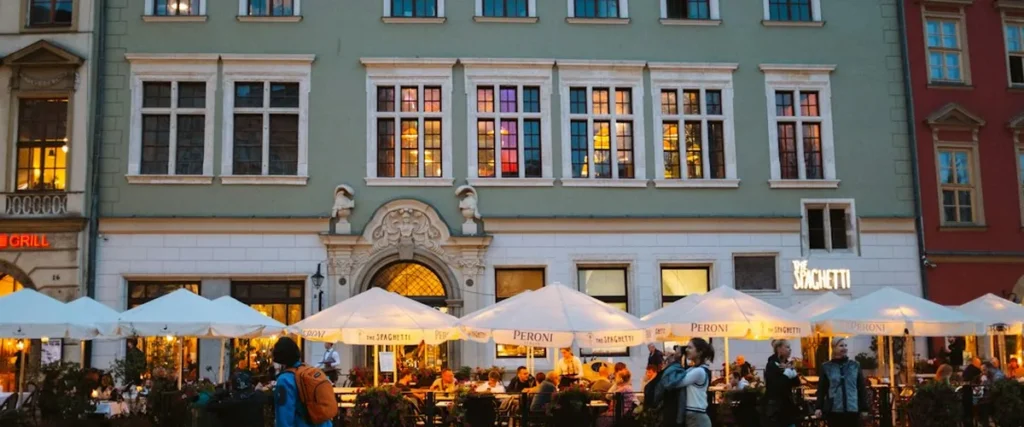
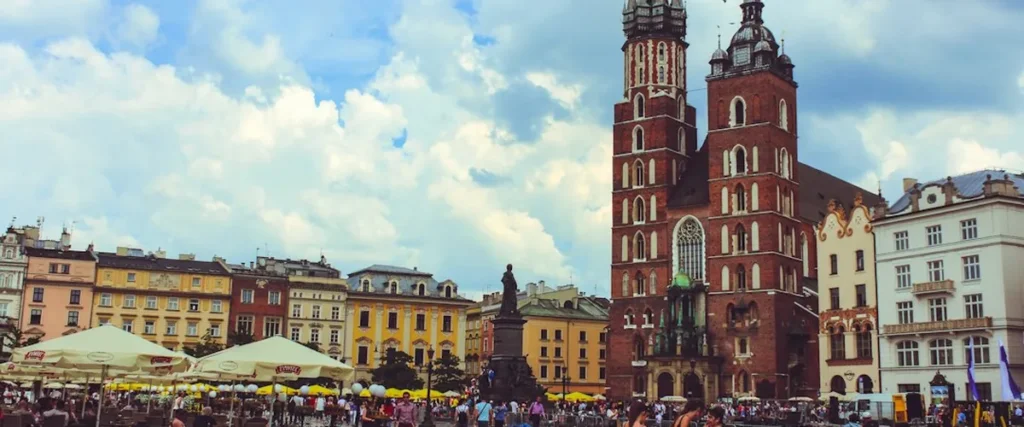
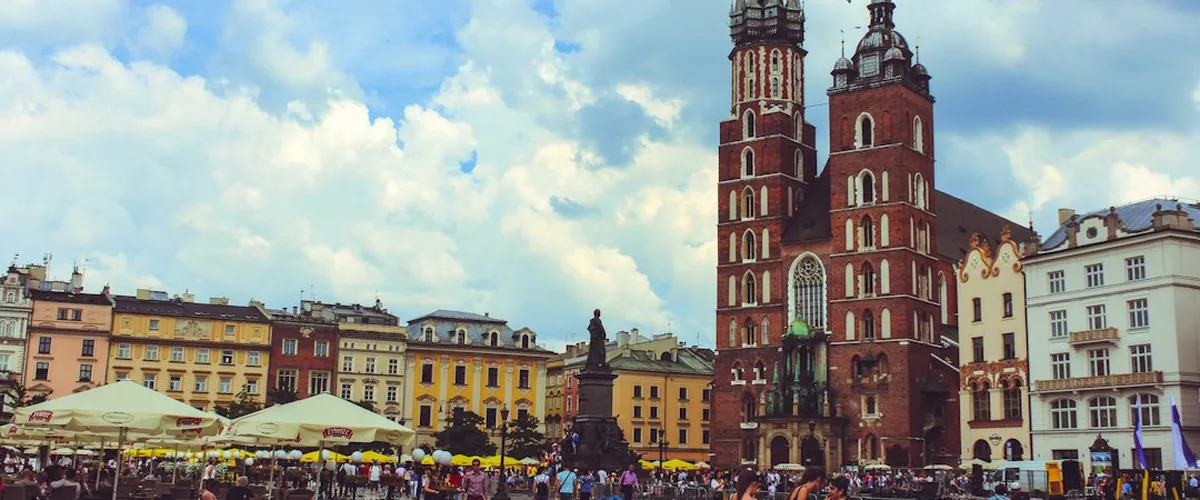
Start in Rynek Główny, the huge market square. Walk through the Cloth Hall, the long arcaded building in the middle, and wait for the top of the hour, when a trumpeter plays the hejnał from the tower of St. Mary’s Basilica and stops mid-note. It is free, it happens every hour, and it never stops being slightly strange.
From the square, walk the Royal Route down Grodzka Street to Wawel Hill, where the castle and cathedral sit above the Vistula. You can walk the courtyards without a ticket. The state rooms, the cathedral and the exhibitions are ticketed separately, so pick one or two rather than buying everything. Check what is open on the Wawel Royal Castle website before you go, because hours and ticket options change by season.
In the late afternoon, walk the Planty, the green ring of park that replaced the old city walls, and finish on the riverbank below Wawel at sunset. Dinner tonight: a milk bar. These are cafeteria-style places that started as subsidized canteens, and they still serve pierogi, soups and cutlets for very little. Order at the counter, read the menu board, and do not expect English or table service.
Day 2: Auschwitz-Birkenau
A visit to the Auschwitz-Birkenau Memorial in Oświęcim is a full day and a heavy one. It is not a budget item in the usual sense, but entry to the grounds is free if you reserve an entry card online through the Memorial’s booking system. Since March, entry cards are sold online only, and none are available at the gate. Groups must use a Memorial guide; individual visitors can go alone or join a guided tour.
Practical rules from the Memorial’s visiting page:
- Arrive at least 30 minutes before your reserved time for security checks.
- Bags may not be larger than 35 x 25 x 15 cm. Leave anything bigger at your accommodation.
- Allow at least 90 minutes each for Auschwitz I and Auschwitz II-Birkenau. A standard guided tour lasts about 3.5 hours.
- Last entry varies by month, from 2 p.m. in December to 7 p.m. in June, July and August.
- The site is closed on January 1, December 25 and Easter Sunday.
Public buses and trains run from Kraków to Oświęcim, and the Memorial is about 2 km from Oświęcim station, with local buses covering the gap. Going independently is far cheaper than a packaged tour from Kraków, though the tour handles transport and timing for you.
Plan nothing for the evening. Most people want a quiet dinner and an early night after this day.
Day 3: Kazimierz, Podgórze and the salt mine
Spend the morning in Kazimierz, the historic Jewish quarter south of the old town. The synagogues, the small squares and the courtyards are best seen early, before the cafés fill up. Plac Nowy, the square with the round market building in the middle, is where locals buy zapiekanki, long open-faced baguettes with mushrooms and cheese. It is one of the cheapest good lunches in the city.
Cross the footbridge to Podgórze for Oskar Schindler’s Factory, now a branch of the Museum of Kraków covering the city under Nazi occupation. It is one of the most visited museums in Kraków, so book a timed ticket in advance.
If you have the energy, spend the afternoon at the Wieliczka Salt Mine just outside the city. The standard Tourist Route is about 3.5 km long, goes down to 135 meters below the surface and takes about two to three hours. It includes more than 800 steps, so it is not suitable for anyone who struggles with stairs. The temperature underground stays around 17 to 18°C, so bring a light layer even in August. The highlight is St. Kinga’s Chapel, carved entirely from salt. Book through the official salt mine website; tours in languages other than Polish and English must be bought online in advance.
Doing Schindler’s Factory and Wieliczka on the same day is tiring. If you would rather rest, swap the mine for a slow afternoon at Kościuszko Mound, which gives a wide view over the city for the price of a modest ticket.
What three days really cost
Kraków sits firmly at the cheap end of Europe, as our list of the cheapest European destinations for 2026 shows. But the total depends heavily on two things: where you sleep and how many paid sights you add.
The fixed costs are easy. Transport is a few singles a day or a 72-hour ticket at 55 PLN. Auschwitz-Birkenau is free to enter with a reserved card if you go without a guide, and you only pay for the bus or train. Wieliczka, Wawel’s interiors and Schindler’s Factory are the paid sights, and adding all three is what pushes a cheap weekend into a normal one.
Food is where Kraków really saves you money. Milk bars, zapiekanki on Plac Nowy and bakery breakfasts can cover most meals for very little, and a sit-down dinner in a regular restaurant still costs well below what you would pay in Western Europe. For more ideas, see our guide to eating cheap in Europe.
Accommodation is the variable. Hostels and simple guesthouses in Kazimierz and Podgórze are cheaper than rooms looking onto the main square, and they are only a short walk or one tram stop away. If you are comparing Kraków with other cities on a daily budget, our breakdown of Europe on €50 a day uses Kraków as one of its comfortable examples.
Small things that save money
- Eat lunch as your main meal. Many restaurants offer a set lunch on weekdays that is much cheaper than the same food at dinner.
- Drink away from the main square. A beer on Rynek Główny costs noticeably more than the same beer two streets away.
- Use the station’s lockers or a storage service on your last day, so you can sightsee after checkout without paying for a late departure. Our guide to luggage storage in Europe has the options.
- Watch your phone and wallet in the crowded square and on busy trams. Kraków is a safe city, but pickpockets work where tourists gather.
Putting the plan together
Three days in Kraków work best when the booked slots are fixed first and everything else is fitted around them: Auschwitz-Birkenau on one day, Wieliczka and Schindler’s Factory on another, and the old town on the day you arrive. Lentii lets you lay out the trip day by day, add the timed entries and the tram rides, and share the itinerary with your travel companions in a few minutes, so nobody misses a booked slot.
FAQ
Is Kraków cheap to visit?
Yes, by European standards. Food, public transport and many sights cost far less than in Western European capitals. The biggest costs are accommodation near the main square and paid attractions like Wieliczka, so a budget trip comes down to where you sleep and how many tickets you buy.
Is three days enough for Kraków?
Three days covers the old town, Wawel, Kazimierz and one major day trip comfortably. If you want to visit both Auschwitz-Birkenau and the Wieliczka Salt Mine without rushing, add a fourth day.
Do I need to book Auschwitz-Birkenau in advance?
Yes. Entry cards are free but must be reserved online, and none are sold at the entrance. Popular times fill up weeks ahead in summer, so book as soon as you know your dates and arrive 30 minutes early for the security check.