
A Nordic road trip is one of the few holidays where the driving is the point. You are not covering distance to reach a beach. You are stopping at a lay-by above a fjord because the light hit the water and nobody else pulled over.
The catch is that the region is enormous and the good months are short. Get the route and the timing wrong and you spend the week behind a caravan on the E6 instead of on the roads you came for. Here is how to plan a Nordic road trip that works: which route to pick, what it costs, when to go, and the practical details that catch first-timers out.
Pick the route before you pick the dates
Most people plan this backwards. They book two weeks in July, then try to squeeze Copenhagen, Stockholm, Oslo, the fjords and Lofoten into it, and end up driving eight hours a day. Decide what kind of trip you want first. There are broadly three, and they barely overlap.
The fjord run: Bergen to Ålesund
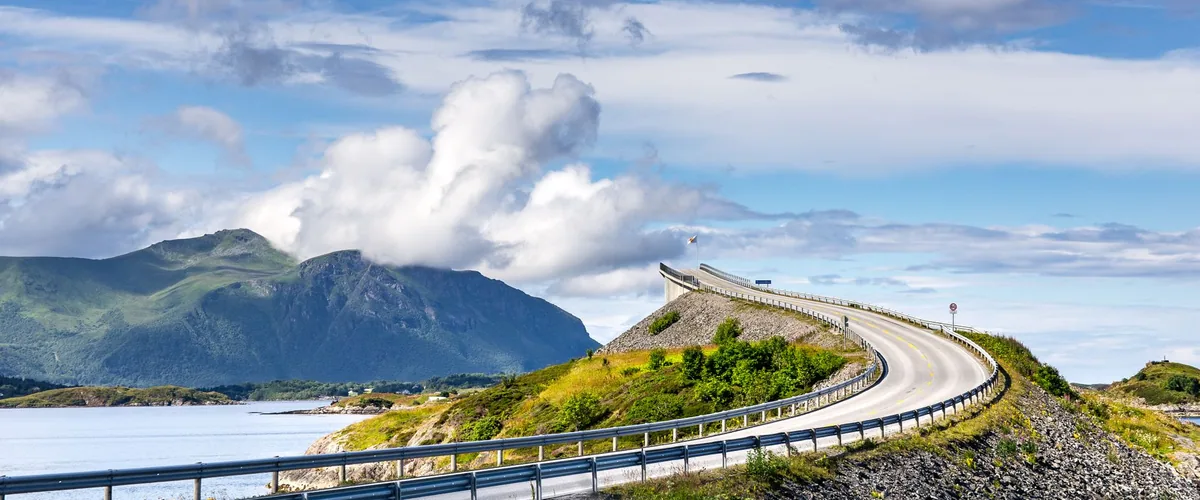
This is the postcard trip. Bergen, then north through Sognefjord and Nordfjord toward Geiranger and Ålesund, with detours onto the mountain passes. It is the shortest of the three in kilometers and the slowest in practice, because the ferries and the hairpins eat time. Norway’s official National Scenic Routes are worth building the whole thing around; they exist specifically because the roads are the attraction.
Best for: first-timers, photographers, anyone who wants maximum scenery per day of driving.
The capitals loop: Copenhagen, Gothenburg, Oslo
Flat, fast, and easy. Copenhagen up over the Øresund Bridge into Sweden, along the west coast to Gothenburg, then Oslo, and back down through the Swedish lakes. The driving is undemanding and the roads are excellent, which means you can cover ground and still spend real time in cities.
Best for: shorter trips, mixed groups, anyone traveling with people who do not want to sit in a car all day.
The far north: Tromsø and Lofoten
The hardest to plan and the one people remember. Lofoten in particular does not behave like the rest of Norway: the islands are small, the single road through them is busy in summer, and accommodation books out months ahead. Most people fly to Tromsø or Bodø and rent from there rather than driving up from the south, which would swallow three days each way.
Best for: second trips, midnight sun in June, northern lights from late September.
| Route | Days needed | Driving load | Best months |
|---|---|---|---|
| Bergen to Ålesund (fjords) | 7–10 | Slow, 3–4 hrs/day | Late May–September |
| Copenhagen–Gothenburg–Oslo | 5–8 | Easy, 2–4 hrs/day | May–October |
| Tromsø / Lofoten | 8–12 | Moderate, weather-dependent | June–August, or Sept–March for aurora |

When to go, and what each season actually gives you
Summer is the obvious answer and it is mostly right. June through August is when the mountain passes are reliably open, the ferries run on full timetables, and the daylight is absurd. Above the Arctic Circle in June the sun does not set, which means you can drive a scenic stretch at ten at night with the road to yourself.
The trade-off is crowds and price. July is peak everywhere in Scandinavia, and Norwegian accommodation in the fjord towns gets expensive and scarce.
Late May and early September are the sweet spot if your dates are flexible. Most passes are open, prices drop, and the campsites are half empty. September brings the first real chance of northern lights in the north while the roads are still easy.
Winter is a different trip entirely, not a cheaper version of the same one. Some mountain roads close from October to May, and the ones that stay open need winter tires and confidence. If snow is what you are after, a fixed base makes more sense than a touring route — the same logic that applies when you are picking from Europe’s best ski resorts.
What a Nordic road trip costs
Scandinavia is expensive, and pretending otherwise ruins budgets. Norway is the priciest of the three countries, Denmark and Sweden are closer to Western European norms. The figures below are rough per-person daily ranges for two people sharing, in high season, and they will shift with the exchange rate and how far north you go.
| Cost | Budget approach | Mid-range |
|---|---|---|
| Sleeping | Campsite or cabin, €25–50 | Guesthouse or hotel, €70–130 |
| Eating | Supermarket, €15–25 | One meal out daily, €45–70 |
| Car, fuel, tolls, ferries | €35–55 | €50–80 |
The line people forget is the last one. Ferries and tolls on a fjord route are not a rounding error; on a week of Norwegian driving they can rival what you spend on fuel. Budget for them from the start rather than discovering them halfway through.
Two things genuinely cut the bill. Cook most of your own meals, because restaurant markups in Norway are steep and the supermarkets are good. And book the car early — rental prices in Bergen and Tromsø climb hard as summer approaches, in the same way flight prices move when you leave booking late.
Driving in the Nordics: the practical stuff
Tolls are automatic. Norway bills by camera, and your rental company will pass the charges on afterward, usually with an admin fee. There is no barrier to stop at. The official AutoPASS system explains how it works and what a rental agreement typically covers.
Ferries are part of the road. On the fjord routes, ferries function as bridges. Most run frequently in summer and you simply queue and drive on. Check the last sailing of the day, though, because missing it can mean a detour of a hundred kilometers or a night you had not planned.
Speed limits are low and enforced. Norwegian limits feel slow relative to the road quality, and the fines are famously severe. This is the single biggest reason your route planner underestimates driving time. Add a third to whatever the app says.
Fuel and charging. The Nordics are far ahead on EV infrastructure, and an electric rental is genuinely practical on the main routes. In the far north and on the mountain passes, chargers thin out. Fill up or charge when you are at half, not at empty.
Wildlife. Elk and reindeer on the road are a real hazard, especially at dawn and dusk. The warning signs are not decorative.
Where to sleep
Sweden and Norway both have a right of public access — allemansrätten in Swedish, allemannsretten in Norwegian — that allows wild camping on uncultivated land, with conditions about distance from houses and how long you stay. Visit Sweden covers the Swedish rules. It is a genuine budget lever, but it is not a free-for-all, and it does not extend to parking a camper anywhere you like.
For most travelers the sensible middle is the Nordic campsite cabin. Simple wooden huts, often with a kitchen, at a fraction of hotel prices, and they exist along every major route. In the fjord towns and on Lofoten, book these well ahead; the good ones go early. The general rules for finding good accommodation apply, with one Nordic addition: check whether bedding is included, because often it is not and renting it on arrival costs more than bringing your own.
Four mistakes that wreck the schedule
Planning by distance instead of by hours. Three hundred kilometers on a Danish motorway and three hundred on a Norwegian fjord road are different holidays. Plan in driving hours.
Booking the flights before the route. Flying into Oslo when your trip is really a Bergen trip costs you a day at each end.
Assuming the mountain passes are open. Several of the best roads are seasonal and some close for repair work for extended periods. Check the status of any pass your route depends on before you commit to it, and keep a lowland alternative in mind.
Stacking too many stops. The scenery is the attraction, and you cannot see it from a car doing seven hours a day. Three hours of driving and two proper stops beats a checklist. There is more of this thinking in our general travel tips, and it applies double here. If you want a comparison point for how other European driving holidays are structured, our roundup of the best places for a road trip in Europe is a good place to start.
The same maths applies if you are staying on trains instead of driving. Our seven-day Europe routes show what a week looks like when you cap it at three cities.
Build the route once, then stop rebuilding it
The awkward part of a road trip is that the plan lives in six places: ferry times in a browser tab, cabin bookings in your inbox, the route in a maps app, and a list of viewpoints someone sent you on Instagram. By day three nobody knows what the plan is.
This is what Lentii is for. Collect the stops, the ferries and the overnight stays into one itinerary, lay them out day by day so you can see when a driving day is too long, and share it with whoever is coming. Change a ferry and everyone sees the new version. Start building your Nordic road trip in Lentii and get the whole route into one place before you leave.
FAQ
How many days do you need for a Nordic road trip?
Seven days is the realistic minimum for one region. The fjords need about a week to be worth the flights; the capitals loop works in five or six. Two weeks lets you combine two regions without rushing. Anything under five days is better spent as a city trip than a driving one.
Is a Nordic road trip expensive?
Norway is expensive, and tolls and ferries add a cost line most people do not budget for. Sweden and Denmark are noticeably cheaper. Cooking your own meals, sleeping in campsite cabins, and booking the rental car months ahead are the three changes that make the biggest difference.
What is the best month for a Nordic road trip?
Late May, early June, and early September. You get open passes, long daylight, and lower prices without peak-July crowds. July has the most reliable weather and the most competition for every cabin and campsite.