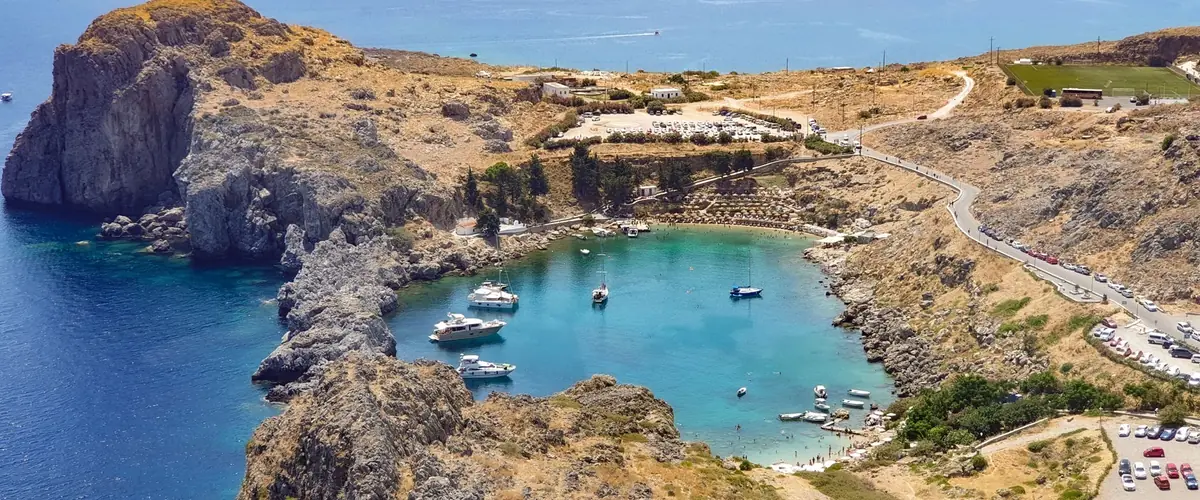

The idea is simple: instead of flying to one Greek island and staying put, you take ferries between several islands over a week or two. Each island has its own character, its own beaches, its own rhythm. Santorini looks nothing like Naxos, and neither one feels anything like Crete. That variety is the whole point.
Greek island hopping sounds complicated, but it’s actually one of the more straightforward multi-stop trips you can plan in Europe. The ferry network is reliable, the islands are close together, and the infrastructure is set up for exactly this kind of travel. Here’s how to do it without overpaying or overcomplicating things.

The Best Route for First-Timers
If you’ve never island-hopped in Greece before, start with the Cyclades. The route most people do — and the one that works best logistically — is Athens (Piraeus port) to Mykonos to Paros to Naxos to Santorini, then fly back from Santorini to Athens.
This route works for a few reasons. The islands are close enough that ferry rides stay under 3 hours. Each island is different enough to feel like a new destination. And the one-way flight from Santorini back to Athens saves you a full day of backtracking by ferry.
For 7–10 days, spend your time roughly like this:
- Mykonos: 2 nights (beaches, nightlife, Delos day trip)
- Paros: 2 nights (quieter beaches, Naoussa village, windsurfing)
- Naxos: 2 nights (longest beaches in the Cyclades, mountain villages, cheap food)
- Santorini: 2–3 nights (caldera views, Oia sunset, wine tasting, volcano boat tour)
What It Actually Costs
Greek island hopping has a reputation for being expensive. It can be, but it doesn’t have to be. The biggest variable is when you go and where you sleep.
| Expense | Budget | Mid-Range | Comfortable |
|---|---|---|---|
| Accommodation (per night) | €25–40 | €70–110 | €150–250 |
| Food (per day) | €15–25 | €30–50 | €60–100 |
| Ferry per leg | €15–30 (slow) | €35–60 (fast) | €40–90 (fast + seat) |
| Total per day | €70–100 | €120–180 | €250–400 |
For a 10-day trip on a mid-range budget, expect to spend roughly €1,400–1,800 per person, excluding international flights. On a strict budget, you can bring that down to €900–1,200 by staying in hostels and guesthouses, eating at local tavernas instead of waterfront restaurants, and taking slow ferries.
One thing that catches people off guard: Santorini and Mykonos cost 40–60% more than Naxos or Paros for equivalent quality. A beachfront room in Naxos for €80 would cost €140 in Santorini. Keep that in mind when budgeting your nights.
How Ferries Work
Greek ferries are the backbone of island hopping, and they’re more organized than you might expect. Two main types run between the Cycladic islands:
Slow ferries (Blue Star, Hellenic Seaways conventional) are the budget option. They take 4–5 hours from Piraeus to Mykonos, cost €30–45, and have open-deck seating where you can watch the islands pass. They’re fine for daytime crossings and surprisingly comfortable.
High-speed catamarans (SeaJets, Golden Star, Hellenic Seaways highspeed) cut the travel time roughly in half. Piraeus to Mykonos takes about 2.5 hours. Tickets run €50–90. The trade-off: smaller boats, no outdoor deck, and they cancel more often in rough weather.
Between islands, the hops are short. Mykonos to Paros is 40 minutes on a fast ferry. Paros to Naxos is 30 minutes. Naxos to Santorini takes about 2 hours.
Booking Tips
Book ferry tickets on Ferryhopper or Direct Ferries — both show real-time schedules and prices across all operators. A few practical things:
- Book at least 3 weeks ahead for July and August. Popular morning departures sell out, and you’ll be stuck with inconvenient evening crossings.
- In May, June, or September, you can usually book a few days ahead without problems.
- Slow ferries rarely sell out. Fast ferries do, especially on weekends.
- Keep your booking confirmations accessible on your phone. Some ports check QR codes, others just want your name.
Island-by-Island Breakdown
Mykonos: The Famous One
Mykonos is loud, photogenic, and expensive. The white-and-blue town (Chora) with its windmills is the postcard image of the Greek islands. The beaches on the south coast — Paradise, Super Paradise, Elia — are where most of the action is.
The real highlight for many visitors is a half-day trip to Delos, the uninhabited archaeological island 30 minutes by boat. It’s one of the most important ancient sites in Greece, and the morning boats get you there before the heat and crowds.
Two nights is enough. Mykonos is best experienced in short bursts.
Paros: The Middle Ground
Paros has the beaches and the nightlife without the Mykonos price tag. Naoussa, the fishing village on the north coast, has turned into a miniature version of Mykonos town — whitewashed alleys, good restaurants, cocktail bars — but at roughly half the cost.
The beaches here are some of the best in the Cyclades. Golden Beach and New Golden Beach on the east coast are windsurfing spots. Santa Maria and Kolymbithres on the north side are calmer and better for swimming.
If you want a day trip, the tiny island of Antiparos is a 10-minute ferry ride away. It has a stunning cave, a handful of beaches, and the kind of quiet that Paros had 20 years ago.
Naxos: The Budget Pick
Naxos is the largest island in the Cyclades and the cheapest of the four on this route. It has the longest sandy beaches (Agios Prokopios, Agia Anna, Plaka — they run for kilometers), a mountainous interior with Byzantine-era villages, and food prices that feel almost unfair compared to Santorini.
This is the island where you slow down. Rent a car or ATV for a day and drive up to Halki, a village in the mountains known for its citron liqueur distillery. Stop at Filoti for lunch at a taverna where the portions are enormous and the bill is €8.
Naxos is also the best island for families and travelers who want good accommodation at reasonable prices. Studios and apartments near the beach run €50–80 per night, even in July.
Santorini: The Grand Finale
Save Santorini for last. The caldera views from Fira and Oia are the most dramatic scenery in the Greek islands, and ending your trip here gives the whole journey a natural climax.
Beyond the sunsets, Santorini has a few things worth planning for. The volcanic hot springs are a boat trip from Fira — you swim in warm, sulfurous water in the middle of the caldera. The wineries along the east coast do tastings with caldera views that cost €15–25 per person. And the ancient ruins at Akrotiri are a Minoan city buried by a volcanic eruption around 1600 BC — think Pompeii, but 1,500 years older.
The main practical advice for Santorini: stay in Fira, not Oia, unless you have a large budget. Oia is gorgeous but tiny, and accommodation there costs roughly double. Fira has more restaurants, better bus connections, and direct access to the cable car down to the old port.
When to Go
The sweet spot is late May through June, or September through mid-October. The weather is warm (25–30°C), the water is swimmable, and the crowds are a fraction of what they are in July and August.
July and August are peak season. Everything costs more, ferries book up, and the popular islands feel packed. The meltemi wind, a strong northern wind that blows across the Aegean, is strongest in July and August and can cancel fast ferry services for a day or two.
If you can only travel in July or August, lean toward Naxos and Paros over Mykonos and Santorini. They absorb the crowds better because they’re larger and less concentrated.
Planning Your Route
The biggest mistake people make with island hopping is trying to see too many islands. Four islands in 10 days is comfortable. Five is doable but rushed. Six or more means you’re spending half your trip on ferries and packing bags.
A few route variations worth considering:
- Short trip (5–7 days): Athens → Mykonos → Santorini. Just two islands, but the two most popular ones. Fly back from Santorini.
- Classic route (10 days): Athens → Mykonos → Paros → Naxos → Santorini. The route described above.
- Off-the-beaten-path (10–14 days): Athens → Naxos → Amorgos → Koufonisia → Paros → Santorini. Smaller islands, fewer tourists, more authentic.
- Budget route (7–10 days): Athens → Naxos → Paros → Santorini. Skip Mykonos entirely (it’s the most expensive island) and spend the saved money on extra nights elsewhere.
Once you’ve picked your route, use a trip planning tool to map out your days, ferry times, and accommodation. Sharing the itinerary with everyone in your group avoids the “wait, which island are we going to tomorrow?” confusion.
Other Island Groups Worth Knowing
The Cyclades are the default, but they’re not the only option. The Dodecanese (Rhodes, Kos, Patmos) are closer to Turkey and have a more Middle Eastern feel to the food and architecture. The Ionian Islands (Corfu, Kefalonia, Zakynthos) are on the west coast, greener and rainier, with dramatic cliffs and Venetian-era towns. The Sporades (Skiathos, Skopelos, Alonissos) are less touristy and easier to reach from northern Greece.
For a first trip, though, stick with the Cyclades. The ferry connections are the most frequent, the infrastructure is the best, and the variety of islands within short distances is hard to beat.
FAQ
How many islands should I visit in a week?
Two or three. You want at least two full days on each island to actually enjoy it. A common mistake is cramming in four or five islands in seven days, which means you spend more time on ferries and in transit than on the beach.
Do I need to book ferries in advance?
In July and August, yes — book at least 2–3 weeks ahead for popular routes. In May, June, or September, you can usually buy tickets a few days before or even at the port. Slow ferries almost never sell out. Fast ferries do, especially weekend morning departures.
Is Greek island hopping good for couples?
It’s one of the best couple trips in Europe. The combination of beaches, food, sunsets, and a new island every few days keeps things interesting without requiring much planning once you have the ferry schedule sorted. Santorini in particular is designed for couples, from the caldera-view restaurants to the private balcony pools.